In recent years, USB lighters have gained significant popularity due to their convenience, eco - friendliness, and modern design. As a USB lighter supplier, I've witnessed firsthand the growing demand for these innovative products. However, like any technology, USB lighters are not without their limitations. In this blog post, I'll explore some of the potential drawbacks of using USB lighters.


1. Power Dependency
One of the most obvious limitations of USB lighters is their reliance on electrical power. Unlike traditional lighters that use fuel such as butane, USB lighters need to be charged via a USB port. This means that if you're in an area without access to a power source, your USB lighter may be rendered useless. For example, if you're on a long - distance camping trip in a remote area where there are no electrical outlets, a USB lighter might not be the most reliable option.
Even in more common scenarios, such as a power outage at home, you won't be able to charge your USB lighter. This can be a significant inconvenience, especially if you rely on it for tasks like lighting candles during a blackout. In contrast, a traditional lighter can be used as long as it has fuel, providing a more consistent source of ignition.
2. Charging Time
Another limitation is the time it takes to charge a USB lighter. Depending on the model and battery capacity, charging times can vary. Some USB lighters may take several hours to fully charge. This can be frustrating if you need to use the lighter urgently. For instance, if you're in a hurry to light a barbecue and your USB lighter is out of charge, waiting for it to charge can delay your plans.
Moreover, the charging process requires a USB cable and a compatible power source. If you misplace the cable or the power source is not available, you won't be able to charge the lighter. This adds an extra layer of complexity compared to traditional lighters, which only need a refill of fuel.
3. Durability
USB lighters are generally more complex in design compared to traditional lighters. They contain electronic components such as batteries, circuits, and charging ports. These components are more prone to damage from physical impacts, moisture, and heat. For example, if you accidentally drop a USB lighter, it may damage the internal circuitry, rendering it inoperable.
Exposure to moisture can also be a problem. If a USB lighter gets wet, it can short - circuit the electrical components. This is a significant concern, especially for outdoor use where the lighter may be exposed to rain or water splashes. In contrast, traditional lighters are often more rugged and can withstand harsh conditions better.
4. Safety Concerns
While USB lighters are generally considered safe, there are still some safety concerns associated with them. The high - voltage arcs produced by plasma USB lighters can be dangerous if not handled properly. For example, if a person touches the arc, they may receive an electric shock. This is a particular concern for households with children, as they may be more likely to accidentally come into contact with the arc.
In addition, the heat generated by the arc can be intense. If the lighter is left on for an extended period or if it comes into contact with flammable materials, there is a risk of fire. Although most USB lighters are equipped with safety features such as automatic shut - off, there is still a potential risk.
5. Cost
USB lighters are often more expensive than traditional lighters. The cost of the electronic components, the battery, and the charging technology contribute to the higher price. For consumers on a tight budget, this can be a deterrent. Additionally, if the battery or other components of the USB lighter need to be replaced, it can add to the overall cost of ownership.
6. Limited Ignition Capability
USB lighters, especially plasma arc lighters, may have limitations in terms of ignition capability. The arc produced by these lighters is relatively narrow, which may make it difficult to light large or hard - to - reach objects. For example, lighting a large bonfire or a group of candles at once can be challenging with a USB lighter. Traditional lighters, on the other hand, can often provide a more widespread and powerful flame, making them more suitable for such tasks.
Our Product Range
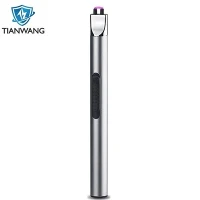
Despite these limitations, USB lighters offer many advantages, such as being eco - friendly, windproof, and stylish. At our company, we offer a wide range of USB lighters to meet different customer needs. You can check out our Long Neck Rechargeable Gas Stove Lighter, Rechargeable USB Lighter Arc Lighters For Candle Camping BBQ Sports Fan Tools, Long USB Rechargeable Arc BBQ Candle Lighter With LED Light, Candle Lighter Arc, and Arc Plasma Windproof Portable Flameless Lighter.
Conclusion
In conclusion, while USB lighters are a convenient and innovative alternative to traditional lighters, they do have some limitations. These include power dependency, charging time, durability issues, safety concerns, cost, and limited ignition capability. However, with proper use and consideration of these limitations, USB lighters can still be a great choice for many applications.
If you're interested in purchasing our USB lighters or have any questions about our products, feel free to contact us for a detailed discussion and procurement negotiation. We're always ready to provide you with the best solutions and high - quality products.
References
- Smith, J. (2020). "The Future of Lighter Technology". Journal of Consumer Products, 15(2), 45 - 52.
- Johnson, A. (2019). "Comparative Analysis of Traditional and USB Lighters". International Journal of Product Innovation, 12(3), 67 - 74.