As modern agriculture moves toward cleaner, more efficient, and more sustainable production methods, physical agriculture technologies are receiving increasing attention. Among them, the high voltage electrostatic generator for agriculture has become an important innovation for improving crop growth, supporting plant protection, and creating a healthier growing environment.
In greenhouse cultivation, plant factories, and high-value crop production, electrostatic technology is being used to enhance air quality, reduce disease pressure, and improve spraying efficiency. This makes it a practical and eco-friendly option for modern farming systems.
What Is a High Voltage Electrostatic Generator?
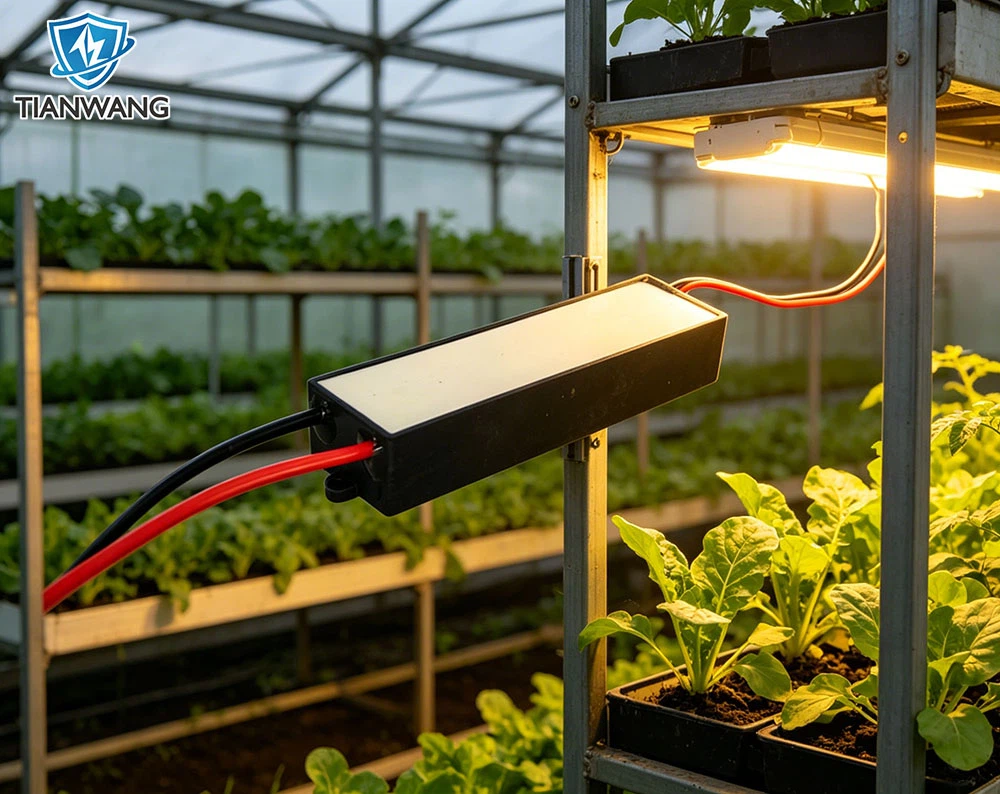
A high voltage electrostatic generator for agriculture is a device that creates a controlled electrostatic field by converting electrical energy into high-voltage output. This field can ionize the surrounding air, generate charged particles, and influence both plant surfaces and airborne particles in the growing environment.
When used correctly, this technology may help:
improve crop growth conditions
reduce airborne dust and microbial contamination
increase spray deposition efficiency
support greener pest management strategies
In other words, it is not just an electrical device. It is a functional tool for building a cleaner and more efficient agricultural environment.
How Electrostatic Technology Works in Agriculture
The core principle of electrostatic agriculture is to use electrical charge to change the behavior of particles in the air and on plant surfaces. A properly designed electrostatic field generator for greenhouse applications can create a more favorable microenvironment for plant growth.
This technology may work in several ways:
1. Supporting plant physiological activity
The electrostatic field may stimulate plant surfaces and improve physiological responses, which can contribute to stronger growth, larger leaf area, and better photosynthesis performance.
2. Improving nutrient and moisture utilization
By influencing the surrounding environment, the system may help plants absorb and use water and nutrients more efficiently, especially in controlled greenhouse settings.
3. Reducing airborne pests and pathogens
Electrostatic fields can help capture dust, spores, and airborne impurities, which may lower the risk of disease transmission and improve air quality inside the greenhouse.
Electrostatic Sprayer Generator for Better Crop Protection
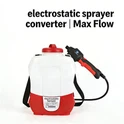
One of the most practical applications of this technology is the electrostatic sprayer generator. In plant protection, electrostatic spraying uses charged droplets that are attracted to plant surfaces, improving coverage and reducing waste.
Compared with conventional spraying, electrostatic spraying in agriculture offers several advantages:
better droplet adhesion
more uniform coverage on leaves and stems
reduced pesticide drift
lower chemical loss
improved spray efficiency
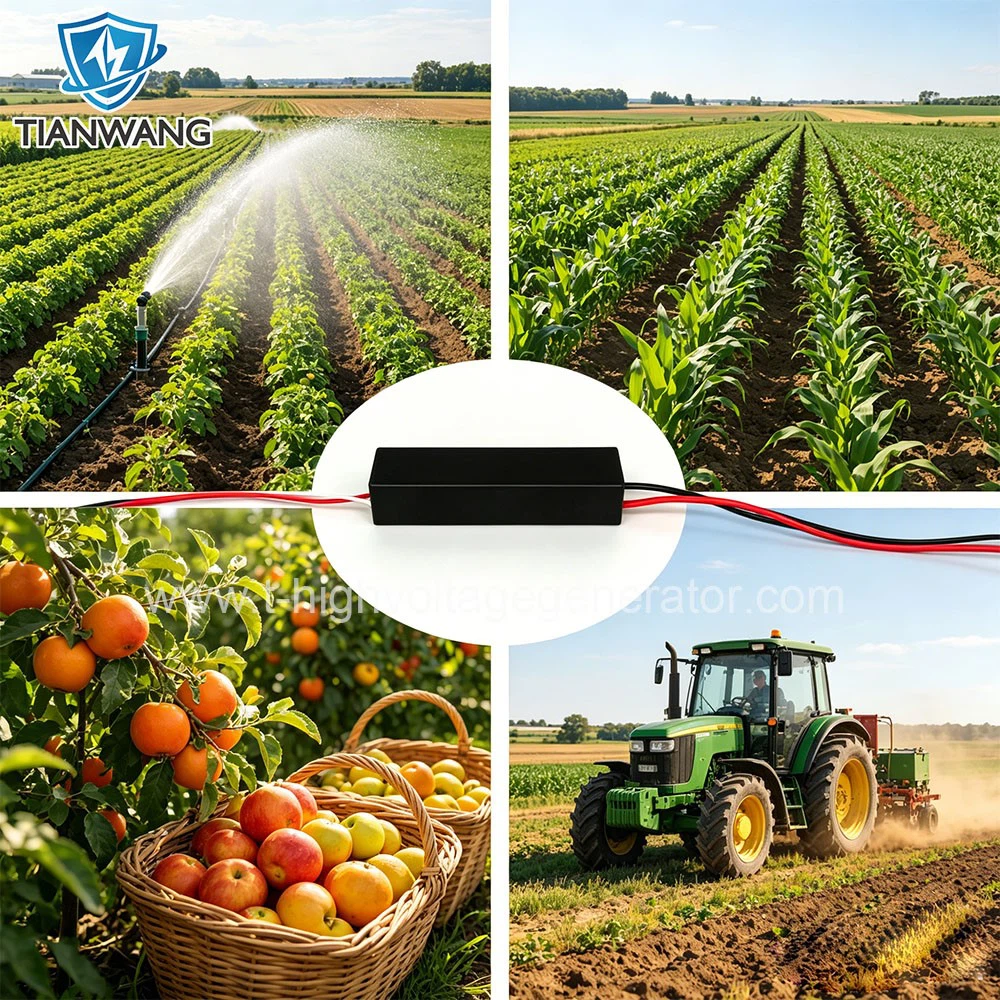
This makes it especially useful in greenhouse production, orchards, vegetable farms, and other precision agriculture scenarios.
Why Electrostatic Spraying in Agriculture Matters
Traditional spraying methods often result in uneven coverage, excessive runoff, and chemical loss. Electrostatic spraying in agriculture solves many of these problems by charging the droplets before they reach the crop surface.
As a result, the spray particles are more likely to wrap around plant leaves and attach evenly, including hard-to-reach areas. This can improve plant protection performance while reducing chemical usage.
For growers focused on sustainability, this is a major advantage. It supports more efficient pest control while aligning with low-residue and eco-friendly farming goals.
High Voltage Generator Module for Plant Protection
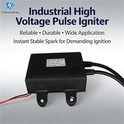
A high voltage generator module for plant protection is often the key component inside electrostatic spraying and field-generation systems. It provides the stable high-voltage output needed to support ionization, droplet charging, and electrostatic field formation.
In practical use, this module can be integrated into:
greenhouse spraying systems
plant protection machines
portable agricultural sprayers
automated crop treatment equipment
smart farming solutions
A reliable module is essential for maintaining consistent performance, safety, and long-term stability in agricultural environments.
Applications in Greenhouse Production
Greenhouses are one of the best environments for electrostatic technology because conditions can be controlled more precisely. A well-designed electrostatic field generator for greenhouse use can help optimize air quality, reduce disease pressure, and improve overall crop management.
Typical greenhouse applications include:
vegetable cultivation
fruit seedling production
flower growing
plant factory systems
organic and low-input farming
By combining high-voltage electrostatic technology with temperature control, humidity management, and smart irrigation, growers can build a more efficient and productive production system.
Key Benefits of Electrostatic Agricultural Technology
Better crop quality
Electrostatic systems may support healthier plant growth, which can lead to better appearance, improved texture, and stronger market value.
Reduced chemical use
Because spray droplets are used more efficiently, growers may reduce overall pesticide consumption and chemical waste.
Improved environmental performance
Electrostatic farming solutions support cleaner production and lower pollution, making them suitable for modern sustainable agriculture.
Stronger pest control
The improved coverage and charged droplet behavior can increase the effectiveness of plant protection treatments.
Future Development of Electrostatic Agriculture
As smart farming continues to evolve, the demand for precise and environmentally friendly technologies will keep growing. The future of high voltage electrostatic generator for agriculture systems will likely focus on:
smarter parameter control
better integration with IoT and automation
more efficient droplet charging systems
greenhouse-specific application models
combined use with other physical agriculture technologies
This will make electrostatic systems even more practical for commercial farms and greenhouse operators.
Conclusion
The high voltage electrostatic generator for agriculture is becoming an important part of modern physical agriculture. Whether used as an electrostatic field generator for greenhouse applications or as an electrostatic sprayer generator for crop protection, it offers real value in improving spray efficiency, supporting plant growth, and reducing environmental impact.
With the continued growth of precision agriculture, sustainable farming, and greenhouse automation, electrostatic spraying in agriculture and the high voltage generator module for plant protection will likely play a larger role in the future of intelligent crop production.
If you are looking for a cleaner, more efficient, and more advanced solution for agricultural production, electrostatic technology is definitely worth attention.