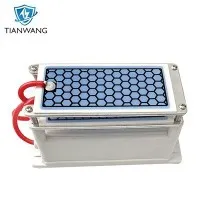
As a supplier of 10g ozone generators, I often get asked if these bad boys can be used in a wine cellar. It's a fair question, and today, I'm gonna dive deep into this topic to give you the lowdown.
Let's first understand what an ozone generator does. Ozone (O₃) is a powerful oxidizing agent. When an ozone generator is working, it produces ozone gas. This gas can break down and neutralize odor - causing molecules, and it also has strong antibacterial and antifungal properties. That's why ozone generators are popular for air purification and odor elimination in various settings.
Now, when it comes to a wine cellar, there are specific environmental requirements. A typical wine cellar needs to maintain a relatively stable temperature, usually between 45°F - 65°F (7°C - 18°C), and a high humidity level, around 60% - 80%. Additionally, the cellar should be free from strong odors because wine can easily absorb them, which may affect its flavor and aroma.
The 10g ozone generator produces a decent amount of ozone. In terms of odor elimination, it can be really effective. In a wine cellar, there can be various sources of unpleasant smells. For example, musty odors from old wood shelves, or bad smells coming from the soil if the cellar is underground. The ozone from a 10g generator can react with these odor molecules. When ozone comes into contact with an odor - causing compound, it oxidizes the compound, turning it into a less - smelly or odorless substance.
Also, the antibacterial and antifungal properties of ozone can be a huge plus in a wine cellar. Mold and mildew are common in these humid environments. They not only create a musty smell but can also damage the wine labels and even affect the corks. By running a 10g ozone generator regularly, you can keep the growth of these microorganisms in check.
However, there are some concerns. One of the biggest worries is how ozone might affect the wine itself. Wine is a very delicate beverage, and its flavor and aroma are the result of a complex combination of chemical compounds. There's a risk that ozone could react with some of these compounds. For instance, ozone might oxidize the delicate esters and alcohols in wine, which could potentially change its taste and aroma.
To minimize this risk, it's important to use the 10g ozone generator properly. You should turn it on when there are no open bottles of wine in the cellar. It's also a good idea to run the generator for a limited time and then let the ozone dissipate completely before opening up the cellar for wine storage or retrieval. A general rule of thumb is to run the 10g ozone generator for about 1 - 2 hours every few days, depending on the size of the cellar and the severity of odors.
Another important factor is the size of the wine cellar. A 10g ozone generator is suitable for medium - sized wine cellars. If your cellar is relatively small, say less than 500 cubic feet (about 14 cubic meters), a 5g Ozone generator might be sufficient. On the other hand, if your cellar is large, over 1500 cubic feet (about 42 cubic meters), you might want to consider a 20g Portable Ozone Generator Air Sterilizer. But for cellars in the range of 500 - 1500 cubic feet (14 - 42 cubic meters), our 10g ozone generator Cleaner Ozonizer Odor Eliminator is a great choice.
In addition to odor and microorganism control, an ozone generator can also help with air circulation to some extent. When the ozone is released into the air, it creates a bit of turbulence as it mixes with the existing air. This can help to distribute air more evenly in the cellar, preventing the formation of stagnant air pockets where mold and odor can accumulate.
But keep in mind that ozone is a toxic gas at high concentrations. You should never stay in the wine cellar while the ozone generator is running. And after running the generator, you need to make sure the cellar is well - ventilated before entering. It usually takes about 30 minutes to an hour for the ozone to break down into oxygen in a well - ventilated space.
If you're still on the fence about whether a 10g ozone generator is right for your wine cellar, here are some signs that you might need one. If you notice a musty smell as soon as you open the cellar door, or if you see mold growing on the shelves or corks, it's a clear indication that the cellar's environment needs improvement.
In conclusion, a 10g ozone generator can be used in a wine cellar, but it has to be used correctly. You need to be careful about the impact on the wine, and also follow safety procedures. With proper use, it can be a valuable tool for maintaining a clean, odor - free, and mold - free wine cellar.


If you're interested in our 10g ozone generator or have any questions about using it in your wine cellar, don't hesitate to reach out for a chat. We're here to help you make the best decision for your wine storage needs.
References
- Diffey, B. L. (2011). "Ozone in the Earth's Atmosphere and Its Effects on Life" in Encyclopedia of Atmospheric Sciences, Second Edition.
- Koshland, C. P., & Hamann, D. D. (1992). Ozone in the environment: health and ecological impacts.