Hey there! I'm a supplier of high voltage coils, and I often get asked if a high voltage coil can be used in a wind turbine. So, I thought I'd dive into this topic and share my thoughts.
First off, let's understand what a high voltage coil is. A high voltage coil is a device that can generate a high voltage from a low - voltage input. It works based on the principle of electromagnetic induction. When an alternating current passes through the primary coil, it creates a changing magnetic field, which in turn induces a high voltage in the secondary coil.
Now, let's talk about wind turbines. Wind turbines are amazing machines that convert the kinetic energy of the wind into electrical energy. They consist of blades, a generator, a gearbox (in some cases), and a control system. The blades capture the wind's energy and rotate the shaft connected to the generator. The generator then produces electricity.
So, can a high voltage coil be used in a wind turbine? The answer is yes, and there are a few reasons for that.
1. Voltage Step - up
Most wind turbines generate electricity at a relatively low voltage. However, for efficient transmission of this electricity over long distances, a higher voltage is required. High voltage coils can be used as transformers to step up the voltage from the low - voltage output of the wind turbine generator to a higher voltage suitable for the power grid. For example, if a wind turbine generator produces electricity at 480V, a high voltage coil can step it up to thousands of volts. This reduces the current in the transmission lines, which in turn reduces the power losses due to the resistance of the wires.
2. Electrical Isolation
High voltage coils can also provide electrical isolation between the wind turbine generator and the power grid. This is important for safety reasons. If there is a fault in the grid or in the wind turbine, the isolation provided by the high voltage coil can prevent the fault from spreading and causing damage to the equipment.
3. Power Conditioning
In addition to voltage step - up and isolation, high voltage coils can be used in power conditioning circuits. These circuits are used to improve the quality of the electrical power produced by the wind turbine. For example, they can help to smooth out the voltage fluctuations and reduce the harmonic distortion in the output power.
There are different types of high voltage coils that can be used in wind turbines. For instance, the High Voltage High Frequency Electric Fence Transformer can be adapted for certain wind turbine applications. It is designed to generate a high voltage at a high frequency, which can be useful in some power conditioning and voltage step - up scenarios.


Another option is the 8 Slot 4 - pin Pulse Transformer High Voltage Package Booster Coil. This type of coil is suitable for applications where a pulsed high voltage is required. It can be used in the control systems of wind turbines to drive certain components or to perform specific electrical functions.
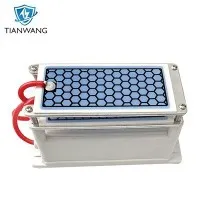
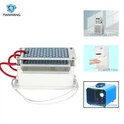
The High Voltage Transformer Ozone Generator can also have its uses in wind turbines. Although it is primarily designed for ozone generation, the high - voltage generation capabilities can be harnessed for other purposes in the wind turbine system, such as in some specialized electrical circuits.
However, there are also some challenges when using high voltage coils in wind turbines.
1. Environmental Conditions
Wind turbines are often located in harsh environmental conditions, such as high - altitude areas, coastal regions, or deserts. These conditions can expose the high voltage coils to extreme temperatures, humidity, salt spray, and dust. This can affect the performance and lifespan of the coils. For example, high humidity can cause corrosion of the coil windings, while high temperatures can increase the resistance of the wires and reduce the efficiency of the coil.
2. Vibration
Wind turbines experience significant vibration during operation. This vibration can cause mechanical stress on the high voltage coils, which may lead to loose connections, insulation damage, or even mechanical failure of the coil. Special measures need to be taken to ensure that the coils are properly mounted and secured to withstand the vibration.
3. Cost
High voltage coils can be relatively expensive, especially those designed for high - power applications. The cost of the coils, along with the installation and maintenance costs, can add up and increase the overall cost of the wind turbine system. However, in the long run, the benefits of using high voltage coils, such as improved power transmission efficiency and equipment protection, may outweigh the initial cost.
Despite these challenges, the use of high voltage coils in wind turbines is becoming more and more common. With the continuous development of technology, the performance and reliability of high voltage coils are improving, and the cost is gradually decreasing.
If you're in the wind turbine industry and are considering using high voltage coils in your projects, I'd love to talk to you. As a high voltage coil supplier, I have a wide range of products that can meet your specific needs. Whether you need a simple voltage step - up transformer or a complex power conditioning coil, I can provide you with the right solution.
So, if you're interested in learning more about our high voltage coils or want to discuss a potential project, don't hesitate to reach out. Let's work together to make your wind turbine projects more efficient and reliable.
References
- "Wind Energy Explained: Theory, Design, and Application" by J.F. Manwell, J.G. McGowan, and A.L. Rogers
- "High Voltage Engineering: Fundamentals" by M. S. Naidu and V. Kamaraju