Hey there! As a supplier of large stun batons, I often get asked a pretty common question: Can a large stun baton be used against animals? Well, let's dig into this topic and find out.
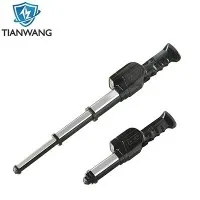
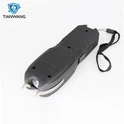
First off, what exactly is a large stun baton? It's a device that can deliver an electric shock to temporarily immobilize a target. We've got some great products in our lineup, like the Expandable Stun Gun with Strong Alarm, the X10 Police Telescopic Stun Baton, and the High Power Stun Gun with Larm. These batons are designed to be powerful and effective, but when it comes to using them on animals, things get a bit more complicated.
The Science Behind Stun Batons
Stun batons work by sending a high - voltage, low - amperage electric shock through the body of the target. This shock disrupts the normal functioning of the muscles and nerves, causing temporary paralysis and pain. The idea is to give you enough time to get away from a threatening situation.
When it comes to animals, their bodies are different from humans in many ways. The size, shape, and electrical conductivity of an animal's body can affect how the stun baton works. For example, a small animal might be more sensitive to the shock, while a larger animal with a thick hide might be less affected.
Legal Considerations
Before you even think about using a stun baton on an animal, you need to check the local laws. In many places, using a stun baton on animals is regulated. Some laws might allow it in certain situations, like when you're protecting yourself or your property from a dangerous animal. But in other cases, it could be considered animal cruelty.
For instance, if you're dealing with a wild animal that's attacking you, you might be within your rights to use a stun baton as a form of self - defense. However, using it on a domestic animal just for fun or without a good reason is definitely not okay. Make sure you understand the legal boundaries in your area to avoid getting into trouble.
Situations Where It Might Be Appropriate
There are some situations where using a large stun baton against an animal could be justified. Let's say you're out in the wilderness and you encounter a bear or a mountain lion that's showing aggressive behavior. In this case, a stun baton could be a useful tool to keep the animal at bay and give you a chance to escape.
Another scenario is if you're on a farm and there's a wild dog or a fox that's attacking your livestock. Using a stun baton to drive the predator away could protect your animals and your livelihood. But again, you need to make sure you're following the law.
Effectiveness on Different Animals
As I mentioned earlier, the effectiveness of a stun baton can vary depending on the animal. Smaller animals like raccoons or skunks are likely to be more affected by the shock. Their smaller bodies have less mass to dissipate the electrical energy, so the shock can have a more significant impact.
On the other hand, larger animals such as cows or horses might not be as easily stunned. Their thick hides and large muscle mass can act as a buffer, reducing the effectiveness of the shock. And some animals, like pigs, have a high level of body fat, which is a poor conductor of electricity. This means that a stun baton might not work as well on them.
Risks and Precautions
Using a stun baton on an animal comes with some risks. First of all, there's a chance that the animal could become even more aggressive if it's shocked. Instead of backing off, it might attack with more force. So, you need to be prepared for this possibility and have a plan to get to safety.
Another risk is that the stun baton could cause serious injury or even death to the animal. If you use it for too long or in the wrong way, you could harm the animal beyond just temporarily immobilizing it. That's why it's important to use the stun baton as a last resort and only when absolutely necessary.
Alternatives to Using a Stun Baton
Before you reach for a stun baton, there are some other things you can try. If you're dealing with a wild animal, making loud noises, using a flashlight, or spraying it with a water hose can sometimes scare it away. There are also non - lethal animal deterrents like pepper spray that are specifically designed for use on animals.
For domestic animals, training and positive reinforcement are usually the best ways to deal with behavior problems. If a dog is being aggressive, for example, working with a professional dog trainer can often solve the issue without the need for a stun baton.
Conclusion
So, can a large stun baton be used against animals? The answer is yes, but with a lot of caution. You need to consider the legal aspects, the effectiveness on the specific animal, and the potential risks. It should only be used in situations where it's absolutely necessary and as a last resort.
If you're interested in our large stun batons, whether it's for personal protection or in case of an animal - related emergency, we're here to help. We offer high - quality products that are designed to be reliable and effective. If you have any questions or want to discuss your needs, feel free to reach out and start a conversation about purchasing. We're always happy to assist you in finding the right stun baton for your situation.


References
- "Animal Welfare Laws in the United States." Animal Legal Defense Fund.
- "Electrical Effects on Biological Systems." Journal of Applied Physiology.