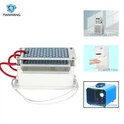
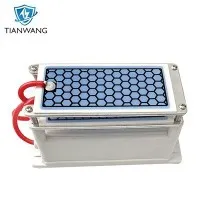
In recent years, the issue of industrial odors has become a significant concern for both industrial operators and the surrounding communities. These odors, often stemming from manufacturing processes, waste treatment facilities, and chemical plants, can have a profound impact on air quality and human health. As a home ozone generator supplier, I'm frequently asked whether our products can effectively tackle these stubborn industrial odors. In this blog post, I'll delve into the science behind ozone, the functionality of home ozone generators, and evaluate their effectiveness against industrial odors.


Understanding Ozone and Its Properties
Ozone, a molecule composed of three oxygen atoms (O₃), is a powerful oxidizing agent. This oxidizing property is what gives ozone its remarkable ability to break down a wide range of substances, including odor - causing compounds. When ozone comes into contact with these compounds, it reacts with them at a molecular level, altering their chemical structure and often neutralizing or minimizing their odor.
In nature, ozone is produced through various processes, such as ultraviolet (UV) radiation from the sun interacting with oxygen in the atmosphere. It also plays a vital role in the ozone layer, protecting the Earth from harmful UV rays. However, at ground - level, ozone can be both beneficial when used properly (e.g., in air purification) and harmful if inhaled in high concentrations.
How Home Ozone Generators Work
Home ozone generators are designed to produce ozone artificially. They typically use one of two methods: corona discharge or UV light.
- Corona Discharge: This method involves passing dry air or oxygen through a high - voltage electrical field. The electrical energy causes some of the oxygen molecules (O₂) to split into individual oxygen atoms, which then combine with other oxygen molecules to form ozone. Corona discharge ozone generators are generally more efficient at producing higher concentrations of ozone.
- UV Light: Ozone can also be generated by exposing oxygen to UV light with a specific wavelength (usually around 185 nanometers). The UV light provides the energy needed to break the oxygen molecules apart and form ozone. UV - based ozone generators are often used in smaller applications and are generally less powerful than corona discharge models.
Capabilities of Home Ozone Generators
Home ozone generators are commonly used for a variety of purposes, such as eliminating odors from smoke, pets, and mold in homes and small offices. They can also be used to sterilize air and surfaces, as ozone has antimicrobial properties.
The output of ozone generators is typically measured in grams per hour (g/h). For example, we offer a 5g Ozone generator which is suitable for small to medium - sized rooms. Our 10g ozone generator Cleaner Ozonizer Odor Eliminator is more powerful and can handle larger areas, while the 20g Portable Ozone Generator Air Sterilizer is designed for even larger spaces and more intense odor problems.
Evaluating the Effectiveness Against Industrial Odors
While home ozone generators can be effective in dealing with common household odors, their effectiveness against industrial odors is a more complex issue.
Advantages
- Oxidation of Odor Compounds: Industrial odors are often caused by complex organic and inorganic compounds. Ozone's strong oxidizing power can break down many of these compounds, transforming them into less offensive or even odorless substances. For example, sulfur - containing compounds, which are common in industrial processes like oil refineries and paper mills, can react with ozone to form sulfates, reducing the characteristic pungent smell.
- Versatility: Ozone generators can potentially address a wide range of industrial odors, regardless of the source. Whether it's the smell from a paint factory, a food processing plant, or a wastewater treatment facility, ozone has the potential to target and neutralize various odor - causing agents.
Limitations
- Scale of the Problem: Industrial settings are much larger and more complex than homes. The volume of air in an industrial facility is often several orders of magnitude greater than that of a typical home. Home ozone generators may not be able to produce enough ozone to effectively treat the large volumes of air in an industrial environment.
- Complexity of Odorants: Industrial odors can contain a vast array of different compounds, some of which may be particularly resistant to oxidation by ozone. For example, certain heavy - duty chemicals and volatile organic compounds (VOCs) may require higher concentrations of ozone or longer exposure times to be fully broken down.
- Safety Concerns: Ozone is a toxic gas, especially at high concentrations. In an industrial setting, where workers are present, it's crucial to maintain strict ozone exposure limits to protect their health. Home ozone generators may not have the advanced safety features and controls required to operate safely in an industrial environment.
Considerations for Using Home Ozone Generators in Industrial Settings
If you're considering using home ozone generators to address industrial odors, here are some important points to keep in mind:
- Size and Capacity: Ensure that the ozone generator has the appropriate output capacity for the size of the industrial space. If the area is large, you may need to use multiple generators or consider more industrial - grade equipment.
- Safety Precautions: Implement strict safety measures, such as using ventilation systems to remove excess ozone and ensuring that workers are properly trained on ozone safety. It's also important to monitor ozone levels regularly to ensure they remain within safe limits.
- Compatibility with Other Systems: Consider how the ozone generator will interact with other industrial equipment and processes. For example, ozone can react with certain materials, potentially causing damage to sensitive equipment.
Can Home Ozone Generators Really Work on Industrial Odors?
In conclusion, while home ozone generators have the potential to address some industrial odor problems, they are not a one - size - fits - all solution. For smaller industrial spaces or areas with less intense odor issues, a high - quality home ozone generator may be a viable option. However, for large - scale industrial facilities with complex odor sources, it's often necessary to invest in dedicated industrial - grade ozone generation systems.
We, as a home ozone generator supplier, are committed to providing our customers with the best possible solutions for odor control. Our generators are designed with quality and performance in mind. Whether you're dealing with a small - scale industrial problem or just want to improve the air quality in your home, we have the right product for you.
If you're interested in exploring how our ozone generators can help with your odor issues, we invite you to reach out to us for a consultation. We can work with you to assess your specific needs and recommend the most suitable ozone generator for your situation. Start the conversation today and take the first step towards a fresher, odor - free environment.
References
- American Conference of Governmental Industrial Hygienists (ACGIH). Threshold Limit Values (TLVs) and Biological Exposure Indices (BEIs).
- Environmental Protection Agency (EPA). Ozone: Health and Environment Effects of Ozone and Related Photochemical Oxidants.
- World Health Organization (WHO). Air Quality Guidelines for Ozone.