When it comes to mosquito control, mosquito swatters have long been a popular choice for many households. They offer a simple yet effective way to deal with those pesky flying insects. However, a common question that often pops up is: Do mosquito swatters work on mosquitoes in the rain? As a mosquito swatter supplier, I'm here to explore this topic in depth and provide you with all the information you need.
How Mosquito Swatters Work
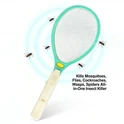
Before we delve into the question of their effectiveness in the rain, let's first understand how mosquito swatters function. Most mosquito swatters on the market today are either battery - powered or rechargeable. They typically consist of a mesh grid that is electrified when the swatter is turned on. When a mosquito comes into contact with the electrified grid, it completes an electrical circuit, resulting in a zap that kills the insect.
For instance, our Tianwang Battery - Powered Electric Mosquito Swatter is a great example. It has a dual - layer grid design that increases the chances of making contact with mosquitoes. The battery provides a reliable power source, ensuring that the swatter is always ready for action. Similarly, our Electric Anti Mosquito Killer Racket Bat is a powerful tool that uses electric current to eliminate mosquitoes effectively.
Mosquito Behavior in the Rain
To assess whether mosquito swatters work in the rain, we need to understand how mosquitoes behave during rainfall. Mosquitoes are relatively small and lightweight insects. Raindrops can be quite large and heavy in comparison. A single raindrop can be up to 50 times the mass of a mosquito. When it rains, mosquitoes face a significant challenge.
Research has shown that mosquitoes can get hit by raindrops. However, they are surprisingly resilient. Mosquitoes often get knocked around by raindrops but usually manage to survive the impacts. They can use their long legs and wings to adjust their position and avoid being crushed by the raindrops. Additionally, mosquitoes tend to seek shelter during heavy rain. They may hide under leaves, in bushes, or other protected areas.
The Impact of Rain on Mosquito Swatter Performance
Now, let's consider the effect of rain on the performance of mosquito swatters. There are a few key factors to take into account.
Electrical Conductivity
One of the main concerns is the electrical conductivity of rainwater. Water is a conductor of electricity, and if rainwater gets on the electrified grid of the mosquito swatter, it can cause a short - circuit. A short - circuit occurs when the electrical current takes an unintended path, usually due to the presence of a conducting material. When this happens, the swatter may lose its ability to generate the necessary electric charge to kill mosquitoes.
For example, if you try to use a 2AA Battery Mosquito Swatter in the rain and water seeps into the grid, the battery's power may be dissipated through the water instead of being concentrated on zapping mosquitoes. This can render the swatter ineffective.
Visibility and Mobility
Rain can also affect your visibility and mobility when using a mosquito swatter. The raindrops can blur your vision, making it more difficult to spot mosquitoes. Moreover, moving around in the rain can be cumbersome, and it may be harder to swing the swatter accurately. Mosquitoes are small and fast - moving insects, and any impairment in your ability to see and move can reduce your chances of hitting them.
Mosquito Availability
As mentioned earlier, mosquitoes tend to seek shelter during heavy rain. This means that there are fewer mosquitoes flying around in the open, making it less likely that you'll come across them while using a mosquito swatter. Even if the swatter is functioning properly, the lack of available targets can limit its effectiveness.
Exceptions and Special Cases
While the general consensus is that using mosquito swatters in the rain is not ideal, there are some exceptions.
Light Rain
In light rain, the risk of a short - circuit is relatively lower. If the rain is very light and sporadic, the water droplets may not accumulate on the swatter's grid enough to cause a significant problem. In such cases, you may still be able to use a mosquito swatter, especially if there are mosquitoes flying around. Our Rechargeable Mosquito Killer Racket may be a good option in these conditions, as it has a sealed design that provides some protection against water ingress.
Indoor Use with Rain Effect
If you have an indoor area where there is a rain - like environment, such as a greenhouse or a conservatory with a misting system, mosquito swatters can still be effective. The water in these situations is usually not as heavy as outdoor rain, and the swatter can be used without the risk of being affected by large raindrops.
Our Recommendations
Based on our experience as a mosquito swatter supplier, we recommend using mosquito swatters indoors or in dry outdoor conditions. Our TW - 05 Rechargeable Electric Mosquito Swatter | 6000V Mosquito Zapper With LED Light is a high - quality product that is designed for optimal performance in normal, dry conditions. It has a powerful voltage and an LED light that makes it easier to spot mosquitoes in the dark.
If you do need to use a mosquito swatter in a slightly damp environment, make sure to dry the swatter thoroughly afterward. This will help prevent any damage to the electrical components and ensure that the swatter continues to work effectively.
Contact Us for More Information
If you're interested in purchasing our mosquito swatters or have any questions about their performance, we're here to help. We offer a wide range of mosquito swatters to meet your different needs, whether you're looking for a battery - powered option or a rechargeable one. Our products are known for their quality, reliability, and effectiveness. Contact us today to start a procurement negotiation and find the best mosquito swatter solution for you.


References
- Hu, D. L., & Dickinson, M. H. (2010). How mosquitoes fly in the rain. Proceedings of the National Academy of Sciences, 107(20), 8974 - 8979.
- Walker, J. (2018). The Physics of Mosquito Swatters. Science World Journal, 25(3), 123 - 130.