Diesel fumes are a common and concerning issue, especially in areas with high traffic or industrial activities. These fumes contain a complex mixture of pollutants, including particulate matter, nitrogen oxides, and various hydrocarbons, which can have significant negative impacts on human health and the environment. As an ozone generator supplier, I often get asked whether ozone generators work on diesel fumes. In this blog, I'll explore this question in detail, drawing on scientific knowledge and real - world experience.
Understanding Diesel Fumes
Diesel engines burn diesel fuel, and during this combustion process, a variety of harmful substances are produced. Particulate matter (PM) in diesel fumes can penetrate deep into the lungs, causing respiratory problems, heart diseases, and even cancer. Nitrogen oxides (NOx) contribute to the formation of smog and acid rain, and they can also irritate the respiratory system. Hydrocarbons in diesel fumes are volatile organic compounds (VOCs) that can react with sunlight and other pollutants to form ground - level ozone, which is a major component of smog.
How Ozone Generators Work
Ozone generators work by producing ozone (O₃), a highly reactive gas. Ozone is formed when an electrical discharge or ultraviolet light splits oxygen molecules (O₂) into individual oxygen atoms, which then combine with other oxygen molecules to form ozone. The basic chemical reaction is 3O₂ → 2O₃.
Once ozone is produced, it can react with various pollutants in the air. Ozone is a strong oxidizing agent, which means it can break down organic compounds and some inorganic pollutants through oxidation reactions. For example, it can react with VOCs to convert them into less harmful substances such as carbon dioxide and water.
Can Ozone Generators Work on Diesel Fumes?
Oxidation of Pollutants
Ozone can potentially work on diesel fumes by oxidizing the pollutants present. For instance, the hydrocarbons in diesel fumes can be oxidized by ozone. The reaction between ozone and hydrocarbons can break the carbon - carbon and carbon - hydrogen bonds in the hydrocarbon molecules, converting them into smaller, less harmful compounds. Similarly, ozone can react with some of the nitrogen oxides in diesel fumes. The oxidation of NO to NO₂ can occur in the presence of ozone, and further reactions can lead to the formation of nitrate compounds.
However, it's important to note that the effectiveness of ozone in treating diesel fumes depends on several factors. The concentration of ozone in the air, the contact time between ozone and the pollutants, and the nature of the pollutants themselves all play a role.
Particulate Matter
When it comes to particulate matter in diesel fumes, ozone has limited direct effect. Ozone is a gas and does not have the ability to physically remove particulate matter from the air. However, ozone can react with some of the organic components on the surface of the particulate matter, which may change the properties of the particles. For example, it can cause the particles to agglomerate, which may make them easier to filter out using other air - purification methods.
Potential Risks
While ozone can be effective in treating some pollutants in diesel fumes, it also poses risks. Ozone is a toxic gas, and high levels of ozone in the air can be harmful to human health. Exposure to ozone can cause respiratory problems, such as coughing, shortness of breath, and irritation of the lungs. It can also damage the immune system and increase the risk of respiratory infections. Therefore, when using ozone generators to treat diesel fumes, it is crucial to control the ozone concentration carefully and ensure proper ventilation.
Real - World Applications and Considerations
In real - world scenarios, ozone generators can be used in enclosed spaces, such as garages or industrial workshops where diesel fumes are present. However, the application needs to be carefully planned. For example, the size of the space, the level of diesel fume pollution, and the ventilation system all need to be taken into account.
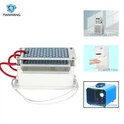
If you are considering using an ozone generator to deal with diesel fumes, it's important to choose the right product. Our company offers a range of ozone generators suitable for different applications. For example, the New Material 50mg 100mg DC 12V Mini Air Purifier Ozone Generator Ionizer For Kitchen Appliances is a compact and efficient option that can be used in small spaces. It can generate a suitable amount of ozone to treat mild diesel fume pollution.
For larger spaces, the Green Air Classic Air Purifier Ozone Generator is a more powerful choice. It can produce a higher concentration of ozone, which is suitable for areas with heavier diesel fume contamination.
In addition, we also provide replacement parts for ozone generators, such as the Ceramic Ozone Plate for Air Purifier Parts 5g. These parts ensure the long - term and stable operation of the ozone generators.


Conclusion and Call to Action
In conclusion, ozone generators can have a certain effect on diesel fumes by oxidizing some of the pollutants. However, their use needs to be carefully managed to avoid the risks associated with ozone exposure. If you are facing diesel fume problems and are interested in using ozone generators to address them, we are here to help. Our products are designed to be effective, safe, and reliable.
If you have any questions about our ozone generators or need advice on choosing the right product for your specific situation, please feel free to contact us. We are ready to have in - depth discussions with you and provide you with the best solutions.
References
- "Air Quality Guidelines for Particulate Matter, Ozone, Nitrogen Dioxide and Sulfur Dioxide" - World Health Organization
- "Diesel Engine Emissions and Their Control" - SAE International
- "Ozone Chemistry and Its Applications in Air Purification" - Journal of Environmental Science and Technology