Hey there! As a high voltage coil supplier, I've been getting a lot of questions about how these coils work, especially in cathode-ray tubes. So, I thought I'd take a deep dive into this topic and share some insights with you.
Let's start with the basics. A cathode-ray tube (CRT) is a vacuum tube that contains one or more electron guns and a phosphorescent screen. It's used in a variety of applications, like old-school TVs and computer monitors. The high voltage coil plays a crucial role in making the CRT work.
The Anatomy of a High Voltage Coil
A high voltage coil is essentially a type of transformer. It's made up of two main parts: the primary winding and the secondary winding. The primary winding is connected to a low-voltage power source, usually around 12V or 24V. The secondary winding, on the other hand, has a much larger number of turns, which allows it to generate a much higher voltage.
When an alternating current (AC) is applied to the primary winding, it creates a magnetic field. This magnetic field then induces a voltage in the secondary winding. The ratio of the number of turns in the secondary winding to the number of turns in the primary winding determines the voltage gain of the coil. For example, if the secondary winding has 100 times more turns than the primary winding, the output voltage will be 100 times higher than the input voltage.
How the High Voltage Coil Works in a CRT
In a CRT, the high voltage coil is used to accelerate the electrons emitted by the electron gun. The electron gun is a device that emits a beam of electrons. These electrons are then accelerated towards the phosphorescent screen by the high voltage generated by the coil.
When the electrons hit the phosphorescent screen, they cause the screen to emit light. This is how the image is formed on the screen. The high voltage coil ensures that the electrons have enough energy to reach the screen and create a bright, clear image.
Types of High Voltage Coils for CRTs
There are several types of high voltage coils that can be used in CRTs. One common type is the flyback transformer. A Flyback Transformer 12v 24v High Voltage Ignition Transformer For Air Purifier is designed to generate a high voltage pulse at a specific frequency. This pulse is used to accelerate the electrons in the CRT.
Another type of high voltage coil is the ignition coil. An High Voltage Transformer For Ignition System is used to generate a high voltage spark, which is used to ignite the gas in a gas boiler or a gas cooker. While these coils are not typically used in CRTs, they are similar in principle and can be used in other high voltage applications.


The Importance of High Voltage Coils in CRTs
High voltage coils are essential for the proper functioning of CRTs. Without a high voltage coil, the electrons emitted by the electron gun would not have enough energy to reach the phosphorescent screen. This would result in a dim or non-existent image.
In addition to providing the necessary voltage for the electrons, high voltage coils also help to control the focus and intensity of the electron beam. By adjusting the voltage and current in the coil, the focus and intensity of the beam can be fine-tuned to create a sharp, clear image.
Applications of High Voltage Coils Beyond CRTs
While high voltage coils are commonly used in CRTs, they have many other applications as well. For example, Gas Ignition Wall Mounted Gas Boiler Water Heater Gas Cooker High Voltage Ignition Coil are used in gas ignition systems to generate a high voltage spark that ignites the gas.
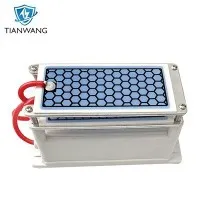
High voltage coils are also used in air purifiers to generate a high voltage field that ionizes the air and removes pollutants. In addition, they are used in medical equipment, such as X-ray machines, to generate the high voltage needed to produce X-rays.
Factors Affecting the Performance of High Voltage Coils
There are several factors that can affect the performance of high voltage coils. One of the most important factors is the quality of the materials used in the coil. High-quality materials, such as copper wire and ferrite cores, can help to reduce losses and improve the efficiency of the coil.
Another factor is the design of the coil. The number of turns in the primary and secondary windings, the spacing between the windings, and the shape of the core can all affect the performance of the coil. A well-designed coil will have a high voltage gain, low losses, and a stable output voltage.
Maintenance and Troubleshooting of High Voltage Coils
Like any other electronic component, high voltage coils require regular maintenance to ensure optimal performance. This includes checking the connections, cleaning the coil, and inspecting the insulation for any signs of damage.
If a high voltage coil is not working properly, there are several troubleshooting steps that can be taken. First, check the power supply to make sure it is providing the correct voltage and current. Next, check the connections to make sure they are secure. If the coil is still not working, it may be necessary to replace the coil.
Conclusion
In conclusion, high voltage coils play a crucial role in the functioning of cathode-ray tubes. They are used to accelerate the electrons emitted by the electron gun and create a bright, clear image on the phosphorescent screen. In addition to their use in CRTs, high voltage coils have many other applications, such as gas ignition systems, air purifiers, and medical equipment.
If you're in the market for high voltage coils, whether for a CRT or another application, I'd love to talk to you. As a high voltage coil supplier, I have a wide range of products to meet your needs. Contact me to discuss your requirements and let's work together to find the perfect solution for you.
References
- Horowitz, P., & Hill, W. (1989). The Art of Electronics. Cambridge University Press.
- Paul, C. R. (2007). Introduction to Electromagnetic Compatibility. John Wiley & Sons.