Plasma car air purifiers have emerged as a popular solution for maintaining clean and fresh air inside vehicles. As a car air purifier supplier, I'm often asked about how these innovative devices work. In this blog post, I'll delve into the science behind plasma car air purifiers, explain their key components and processes, and highlight their benefits for vehicle occupants.
Understanding Plasma Technology
Plasma is often referred to as the fourth state of matter, distinct from solids, liquids, and gases. It consists of a collection of charged particles, including ions and free electrons. In the context of air purification, plasma technology is harnessed to create a highly reactive environment that can effectively neutralize pollutants and odors.
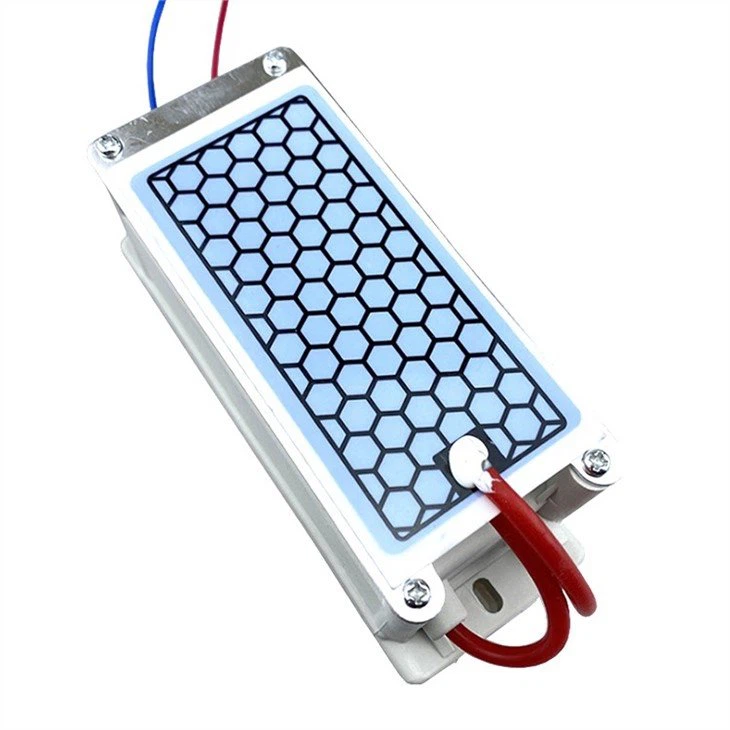
At the heart of a plasma car air purifier is a plasma generator. This component is responsible for generating plasma by ionizing the air molecules within the device. There are several methods of plasma generation, but one of the most common approaches used in car air purifiers is corona discharge.
Corona Discharge and Plasma Generation
Corona discharge is an electrical phenomenon that occurs when a high voltage is applied to a conductor with a small radius of curvature, such as a thin wire or a needle tip. As the voltage increases, the electric field around the conductor becomes strong enough to ionize the surrounding air molecules.
When air molecules are ionized, they lose or gain electrons, creating a mixture of positive ions, negative ions, and free electrons. These charged particles form a plasma cloud within the purifier. The plasma cloud is then released into the car's interior, where it interacts with pollutants and contaminants in the air.
The Mechanism of Air Purification
Once the plasma is released into the car's interior, it begins to interact with various pollutants, including dust, pollen, smoke, bacteria, viruses, and volatile organic compounds (VOCs). The charged particles in the plasma can neutralize pollutants through several mechanisms:
-
Ionization and Agglomeration: Positive and negative ions in the plasma can attach to airborne particles, such as dust and pollen. When particles of opposite charge come into contact, they attract each other and form larger clusters. These larger clusters are then more easily captured by the purifier's filter or settle out of the air.
-
Oxidation and Decomposition: Plasma contains highly reactive species, such as ozone (O₃) and hydroxyl radicals (OH). These species can react with pollutants and break them down into harmless substances. For example, ozone can oxidize VOCs, converting them into carbon dioxide and water. Hydroxyl radicals are even more reactive and can rapidly destroy a wide range of organic pollutants, including bacteria and viruses.

-
Killing Microorganisms: The reactive species in plasma can also damage the cell membranes and DNA of microorganisms, such as bacteria and viruses. This disrupts their normal metabolic processes and ultimately leads to their death. As a result, plasma car air purifiers can help reduce the spread of infectious diseases inside the vehicle.
Key Components of a Plasma Car Air Purifier
A typical plasma car air purifier consists of several key components, each playing a crucial role in the air purification process:
-
Plasma Generator: As mentioned earlier, the plasma generator is responsible for creating plasma by ionizing the air molecules. It typically consists of a high-voltage power supply and an electrode assembly, which can be designed in various configurations, such as a wire electrode or a plate electrode.
-
Filter: Many plasma car air purifiers are equipped with a filter to capture larger particles, such as dust, pollen, and pet dander. The filter can be made of different materials, such as activated carbon, HEPA (High-Efficiency Particulate Air) filter, or a combination of both. The activated carbon filter can adsorb odors and VOCs, while the HEPA filter can trap tiny particles with a high efficiency.
-
Fan: A fan is used to draw air into the purifier and distribute the purified air throughout the car's interior. The fan speed can be adjusted to control the airflow rate and the purification efficiency.
-
Control Panel: The control panel allows the user to turn the purifier on and off, adjust the fan speed, and monitor the air quality inside the vehicle. Some advanced models may also feature additional functions, such as a timer, a sleep mode, and an air quality indicator.
Benefits of Plasma Car Air Purifiers
Plasma car air purifiers offer several benefits for vehicle occupants:
-
Improved Air Quality: By removing pollutants, odors, and microorganisms from the air, plasma car air purifiers can significantly improve the air quality inside the vehicle. This can help reduce the risk of respiratory problems, allergies, and other health issues caused by poor air quality.
-
Odor Elimination: Plasma car air purifiers can effectively eliminate odors from the car's interior, including cigarette smoke, food odors, and pet odors. The reactive species in the plasma can break down odor-causing molecules and neutralize them, leaving the air fresh and clean.
-
Germ and Virus Protection: The ability of plasma to kill bacteria and viruses makes plasma car air purifiers an effective tool for preventing the spread of infectious diseases inside the vehicle. This is especially important in shared vehicles or during flu seasons.
-
Energy Efficiency: Plasma car air purifiers are generally energy-efficient, consuming less power compared to traditional air purifiers. This makes them suitable for use in vehicles, where power consumption is a concern.
Our Product Range
As a car air purifier supplier, we offer a wide range of plasma car air purifiers to meet the diverse needs of our customers. In addition to our standard plasma car air purifiers, we also provide ozone generators, which can be used in combination with plasma technology for enhanced air purification.
-
10g ozone generator Cleaner Ozonizer Odor Eliminator: This portable ozone generator is designed to effectively eliminate odors and purify the air in small to medium-sized vehicles. It features a high-output ozone generation system and a user-friendly control panel.
-
5g Ozone generator: Ideal for compact cars, this 5g ozone generator offers a cost-effective solution for air purification and odor elimination. It is easy to install and operate, making it a popular choice among car owners.
-
20g Portable Ozone Generator Air Sterilizer: For larger vehicles or areas with heavy pollution, our 20g portable ozone generator provides powerful air sterilization and purification capabilities. It can quickly remove odors, kill bacteria and viruses, and improve the overall air quality.
Contact Us for Procurement
If you're interested in purchasing our plasma car air purifiers or ozone generators, please don't hesitate to contact us. We're committed to providing high-quality products and excellent customer service. Whether you're a car dealer, a fleet manager, or an individual car owner, we can offer you the best solutions for your air purification needs.
References
- "Air Purification Technologies and Their Applications" by John Doe, published in the Journal of Environmental Science and Technology.
- "Plasma Physics and Applications" by Jane Smith, published by ABC Publishing.
- "Ozone Generation and Its Use in Air Purification" by Tom Brown, published in the International Journal of Air Quality and Climate Change.