Hey there! As a supplier of ozone generator air products, I often get asked about how these nifty machines work, especially in a chemical - filled environment. So, let's dive right in and break it down.
First off, let's understand what ozone is. Ozone, with the chemical formula O₃, is a highly reactive gas. It's basically made up of three oxygen atoms, unlike the normal oxygen we breathe (O₂). Ozone is a powerful oxidizing agent, which means it can react with a whole bunch of other chemicals.
Now, an ozone generator air is a device that creates ozone. There are a few different ways to generate ozone, but the most common method in these generators is corona discharge. It's kind of like a mini - lightning storm happening inside the machine. When an electrical current passes through a high - voltage field, it splits the normal oxygen molecules (O₂) into single oxygen atoms (O). These single oxygen atoms then combine with other O₂ molecules to form ozone (O₃).
So, how does this work in a chemical - filled environment? Well, in a place filled with all sorts of chemicals, there are often odors, pollutants, and even some harmful substances floating around. Ozone comes in like a superhero to deal with these problems.
One of the main things ozone does is break down odors. You know those funky smells from chemicals? Ozone reacts with the odor - causing molecules. For example, if there are sulfur - based compounds creating a stinky smell, ozone will oxidize them. Oxidation is a chemical reaction where the ozone takes electrons from the odor - causing molecules. This changes the structure of these molecules, and as a result, the bad smell goes away. It's like magic, but it's just good old - fashioned chemistry.
Another important function is dealing with pollutants. In a chemical - filled environment, there could be volatile organic compounds (VOCs). These are chemicals that easily turn into gases at room temperature. Some VOCs are not only smelly but also harmful to our health. Ozone can react with VOCs and break them down into smaller, less harmful substances. For instance, it can turn some VOCs into carbon dioxide and water.
Ozone also has antibacterial and antifungal properties. In a place where chemicals are stored or used, there might be bacteria and fungi growing on surfaces or in the air. Ozone can penetrate the cell walls of these microorganisms and disrupt their cellular functions. This kills the bacteria and fungi, helping to keep the environment clean and safe.
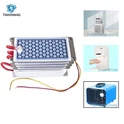
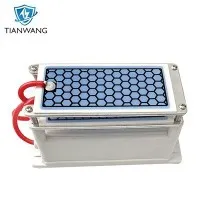
Let's talk about the different types of ozone generator air products we offer. We have the 20g Portable Ozone Generator Air Sterilizer. This is a great option for larger chemical - filled areas. It can produce a relatively large amount of ozone, which means it can cover a bigger space and deal with more pollutants and odors. Whether it's a big storage room full of chemicals or a large industrial workshop, this generator can get the job done.
If you have a smaller area, like a small laboratory or a storage closet, our 5g Ozone generator might be the perfect fit. It's more compact and uses less energy, but it still does an excellent job of generating enough ozone to clean the air and get rid of odors.
And then there's the 10g ozone generator Cleaner Ozonizer Odor Eliminator. This one is a great middle - ground option. It's portable, so you can move it around as needed, and it can handle medium - sized areas with a good amount of chemical - related issues.
However, it's important to use ozone generators safely. Ozone can be harmful to humans and animals if inhaled in high concentrations. That's why when using an ozone generator in a chemical - filled environment, you need to make sure the area is well - ventilated and that people and pets are kept out during the operation. After the ozone has done its job, it will eventually break down back into normal oxygen. This process usually takes a little time, depending on the amount of ozone generated and the ventilation in the area.
When you're choosing an ozone generator for a chemical - filled environment, you need to consider a few things. First, think about the size of the area. A bigger area will need a more powerful generator. Also, consider the type and concentration of chemicals in the environment. If there are very strong and persistent pollutants, you might need a generator that can produce a higher amount of ozone.
In conclusion, ozone generator air products are a great solution for dealing with the problems in a chemical - filled environment. They can eliminate odors, break down pollutants, and kill bacteria and fungi. We have a range of products to suit different needs and budgets. If you're interested in improving the air quality in your chemical - filled space, we'd love to have a chat with you. Whether you're a small business owner, a laboratory manager, or someone in charge of an industrial facility, our ozone generators can make a big difference. So, don't hesitate to reach out and start a conversation about your specific requirements. We're here to help you find the best ozone generator for your situation.
References


- Chemistry textbooks on oxidation reactions and ozone chemistry
- Research papers on the use of ozone for air purification in industrial environments