Designing a high voltage coil is a complex yet rewarding process that requires a deep understanding of electrical engineering principles, materials science, and application-specific requirements. As a high voltage coil supplier, I've had the privilege of working on a wide range of projects, from medical equipment to industrial machinery. In this blog post, I'll share some insights and best practices on how to design a high voltage coil that meets your specific needs.
Understanding the Basics of High Voltage Coils
Before diving into the design process, it's essential to understand the basic principles behind high voltage coils. A high voltage coil is essentially an inductor that stores energy in a magnetic field when an electric current flows through it. When the current is interrupted, the magnetic field collapses, inducing a high voltage across the coil. This phenomenon is known as electromagnetic induction and is the foundation of many high voltage applications.
The key parameters that define the performance of a high voltage coil include:
- Inductance: This is a measure of the coil's ability to store energy in a magnetic field. It is determined by the number of turns, the cross-sectional area of the coil, and the permeability of the core material.
- Capacitance: High voltage coils also have capacitance between the turns, which can affect their performance at high frequencies. Minimizing capacitance is crucial to reduce losses and improve efficiency.
- Resistance: The resistance of the coil wire affects the power loss and the efficiency of the coil. Using low-resistance wire can help reduce power dissipation and improve performance.
- Voltage Rating: This is the maximum voltage that the coil can withstand without breaking down. It is determined by the insulation material, the spacing between the turns, and the overall design of the coil.
Step-by-Step Guide to Designing a High Voltage Coil
Step 1: Define the Requirements
The first step in designing a high voltage coil is to define the specific requirements of your application. This includes the desired voltage output, the frequency of operation, the power rating, and any other performance criteria. Consider factors such as the operating environment, the available space, and the budget.
For example, if you're designing a high voltage coil for a medical lithotripter, you'll need to ensure that the coil can generate a high enough voltage to break up kidney stones while operating safely and reliably. In this case, you might be interested in our High Voltage High Frequency Transformer For Medical Lithotripter.
Step 2: Select the Core Material
The core material plays a crucial role in the performance of a high voltage coil. It affects the inductance, the magnetic field strength, and the power losses. Common core materials include iron, ferrite, and air.
- Iron Cores: Iron cores have high magnetic permeability, which allows for a high inductance and a strong magnetic field. They are suitable for low-frequency applications where high power is required. However, iron cores also have high eddy current losses, which can reduce the efficiency of the coil.
- Ferrite Cores: Ferrite cores have lower magnetic permeability than iron cores but also lower eddy current losses. They are suitable for high-frequency applications where efficiency is crucial. Ferrite cores are commonly used in transformers, inductors, and other high voltage components.
- Air Cores: Air cores have the lowest magnetic permeability and the lowest losses. They are suitable for applications where a low inductance and a high Q factor are required, such as in radio frequency circuits.
Step 3: Determine the Number of Turns
The number of turns in the coil is determined by the desired inductance and the voltage output. The more turns the coil has, the higher the inductance and the voltage output. However, increasing the number of turns also increases the resistance and the capacitance of the coil, which can affect its performance.
To calculate the number of turns, you can use the following formula:
[L = \frac{\mu N^2 A}{l}]
where (L) is the inductance, (\mu) is the permeability of the core material, (N) is the number of turns, (A) is the cross-sectional area of the coil, and (l) is the length of the coil.
Step 4: Choose the Wire Size
The wire size affects the resistance and the current-carrying capacity of the coil. A larger wire size has lower resistance and can carry more current, but it also takes up more space and increases the cost of the coil.
To choose the wire size, you need to consider the current requirements of your application and the allowable power losses. You can use a wire gauge chart to select the appropriate wire size based on the current and the voltage.


Step 5: Design the Insulation
Insulation is crucial to prevent electrical breakdown and ensure the safety and reliability of the high voltage coil. The insulation material should have high dielectric strength, low dielectric constant, and good thermal stability.
Common insulation materials include epoxy resin, polyester film, and ceramic. The insulation thickness and the spacing between the turns should be designed to withstand the maximum voltage and the operating conditions.
Step 6: Optimize the Design
Once you have designed the basic structure of the high voltage coil, you need to optimize the design to improve its performance and efficiency. This may involve adjusting the number of turns, the wire size, the core material, or the insulation thickness.
You can use computer-aided design (CAD) software and electromagnetic simulation tools to analyze the performance of the coil and make informed design decisions. These tools can help you predict the inductance, the capacitance, the magnetic field distribution, and the power losses of the coil.
Testing and Validation
After designing and fabricating the high voltage coil, it's essential to test and validate its performance. This includes measuring the inductance, the capacitance, the resistance, and the voltage output. You should also perform high voltage testing to ensure that the coil can withstand the maximum voltage without breaking down.
Testing should be conducted in a controlled environment using appropriate test equipment. Any deviations from the design specifications should be investigated and corrected before the coil is used in the final application.
Conclusion
Designing a high voltage coil requires a combination of technical knowledge, experience, and attention to detail. By following the steps outlined in this blog post, you can design a high voltage coil that meets your specific requirements and performs reliably in your application.
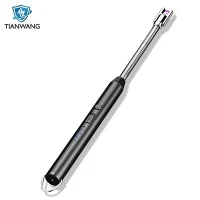
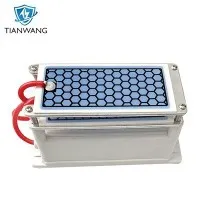
As a high voltage coil supplier, we have the expertise and the resources to help you design and manufacture high quality high voltage coils. Whether you need a 20KV high Frequency High voltage Ignition Coil for a gas burner or a High Voltage Transformer Ozone Generator, we can provide you with customized solutions that meet your needs.
If you're interested in learning more about our high voltage coil products or have a specific design requirement, please don't hesitate to contact us. We look forward to working with you to develop the perfect high voltage coil for your application.
References
- Grover, F. W. (1946). Inductance Calculations: Working Formulas and Tables. Dover Publications.
- Fitzgerald, A. E., Kingsley, C., Jr., & Umans, S. D. (2003). Electric Machinery. McGraw-Hill.
- Chen, W. K. (Ed.). (1987). The Electrical Engineering Handbook. CRC Press.