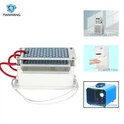
Ozone purifiers have gained significant popularity in recent years as effective tools for air purification, odor removal, and disinfection. As an ozone purifier supplier, I often receive inquiries from customers about the ozone decay rate in a room after using an ozone purifier. Understanding this rate is crucial for ensuring the safe and efficient use of ozone purifiers. In this blog post, I will delve into the factors that influence the ozone decay rate and provide some insights based on scientific research.
What is Ozone and How Does an Ozone Purifier Work?
Ozone (O₃) is a highly reactive gas composed of three oxygen atoms. It is a powerful oxidizing agent that can break down and neutralize various pollutants, including bacteria, viruses, mold spores, and odorous compounds. Ozone purifiers work by generating ozone through electrical discharge or ultraviolet light. The generated ozone is then released into the air, where it reacts with pollutants and breaks them down into less harmful substances.
Factors Affecting the Ozone Decay Rate
The ozone decay rate in a room after using an ozone purifier is influenced by several factors, including:
1. Initial Ozone Concentration
The higher the initial ozone concentration in the room, the longer it will take for the ozone to decay. This is because there are more ozone molecules available to react with pollutants and other substances in the air. For example, if you use a 5g Ozone generator in a small room, the initial ozone concentration will be relatively high, and it may take longer for the ozone to decay compared to using a lower-output ozone generator.
2. Room Size and Ventilation
The size of the room and the level of ventilation also play a significant role in the ozone decay rate. In a larger room, the ozone will be more diluted, and it will take longer for the ozone to react with pollutants and decay. On the other hand, good ventilation can help to remove ozone from the room more quickly by replacing the ozone-rich air with fresh air. For instance, if you open windows and doors after using an ozone purifier, the ozone will be dispersed more rapidly, reducing the decay time.
3. Temperature and Humidity
Temperature and humidity can affect the chemical reactions that occur between ozone and pollutants. Generally, higher temperatures and humidity levels can accelerate the ozone decay rate. This is because higher temperatures increase the kinetic energy of the ozone molecules, making them more reactive. Humidity can also provide a medium for ozone to react with water vapor, which can lead to the formation of other chemical species and the subsequent decay of ozone.
4. Presence of Pollutants and Surfaces
The presence of pollutants and surfaces in the room can also influence the ozone decay rate. Ozone reacts with various pollutants, such as volatile organic compounds (VOCs), bacteria, and mold spores. The more pollutants there are in the room, the more ozone will be consumed in the reaction, leading to a faster decay rate. Additionally, ozone can react with surfaces in the room, such as walls, furniture, and fabrics. These reactions can also contribute to the decay of ozone.
Scientific Studies on Ozone Decay Rate
Several scientific studies have been conducted to investigate the ozone decay rate in different environments. One study published in the Journal of Environmental Science and Health found that the ozone decay rate in a closed room followed an exponential decay model. The study also showed that the decay rate was influenced by factors such as initial ozone concentration, room size, and ventilation.


Another study conducted by the National Institute of Standards and Technology (NIST) examined the ozone decay rate in a chamber with different levels of humidity and temperature. The results indicated that higher humidity and temperature levels led to a faster ozone decay rate.
Estimating the Ozone Decay Time
Based on the factors mentioned above, it is difficult to provide an exact estimate of the ozone decay time in a room after using an ozone purifier. However, as a general guideline, it is recommended to allow at least 30 minutes to several hours for the ozone to decay to a safe level after using an ozone purifier. In a well-ventilated room, the ozone may decay more quickly, while in a poorly ventilated room, it may take longer.
It is important to note that ozone can be harmful to human health at high concentrations. The Occupational Safety and Health Administration (OSHA) has set a permissible exposure limit (PEL) for ozone of 0.1 ppm (parts per million) over an 8-hour workday. Therefore, it is crucial to ensure that the ozone concentration in the room has decayed to a safe level before re-entering the room.
Choosing the Right Ozone Purifier
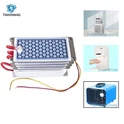
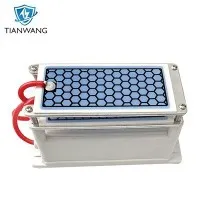
As an ozone purifier supplier, I offer a range of ozone purifiers with different ozone output capacities, such as the 5g Ozone generator, 10g ozone generator Cleaner Ozonizer Odor Eliminator, and 20g Portable Ozone Generator Air Sterilizer. When choosing an ozone purifier, it is important to consider the size of the room, the level of pollution, and the desired ozone concentration. A larger room or a higher level of pollution may require a more powerful ozone purifier to achieve the desired results.
Safety Precautions
When using an ozone purifier, it is essential to follow safety precautions to ensure the well-being of users. Here are some safety tips:
- Do not use the ozone purifier in occupied spaces: Ozone can be harmful to human health, especially at high concentrations. Make sure to evacuate the room before using an ozone purifier and wait until the ozone has decayed to a safe level before re-entering.
- Follow the manufacturer's instructions: Read and follow the instructions provided by the manufacturer carefully. This includes the recommended operating time, ozone output settings, and maintenance procedures.
- Monitor the ozone concentration: If possible, use an ozone monitor to measure the ozone concentration in the room. This can help you to ensure that the ozone concentration is within the safe limits.
Conclusion
The ozone decay rate in a room after using an ozone purifier is influenced by several factors, including initial ozone concentration, room size and ventilation, temperature and humidity, and the presence of pollutants and surfaces. While it is difficult to provide an exact estimate of the decay time, it is important to allow sufficient time for the ozone to decay to a safe level before re-entering the room. By understanding these factors and following safety precautions, you can use ozone purifiers effectively and safely to improve the air quality in your environment.
If you are interested in purchasing an ozone purifier or have any questions about ozone decay rates, please feel free to contact us for more information and to discuss your specific needs. We are committed to providing high-quality ozone purifiers and professional advice to help you achieve a clean and healthy indoor environment.
References
- Journal of Environmental Science and Health. (Year). "Study on Ozone Decay Rate in Closed Rooms."
- National Institute of Standards and Technology (NIST). (Year). "Investigation of Ozone Decay Rate under Different Conditions."
- Occupational Safety and Health Administration (OSHA). (Year). "Permissible Exposure Limits for Ozone."