Hey there! As a supplier of ozone purifiers, I often get asked about the ozone safety standard for these nifty devices. So, I thought I'd take a moment to break it down for you in a way that's easy to understand.
First off, let's talk about what ozone is. Ozone is a gas made up of three oxygen atoms (O₃), and it's a powerful oxidizer. That means it can break down and neutralize all sorts of bad stuff in the air, like odors, bacteria, and viruses. That's why ozone purifiers are so popular for cleaning up the air in homes, offices, and other spaces.
But here's the thing: ozone can also be harmful to humans if the levels are too high. That's where the safety standards come in. These standards are set to make sure that ozone purifiers are safe to use without causing any health problems.
The most widely recognized ozone safety standard in the United States is set by the Environmental Protection Agency (EPA) and the Occupational Safety and Health Administration (OSHA). The EPA has set a limit of 0.070 parts per million (ppm) for an 8 - hour average exposure to ozone in outdoor air. OSHA, on the other hand, has set a permissible exposure limit (PEL) of 0.1 ppm for an 8 - hour time - weighted average (TWA) for workplace exposure to ozone.
For ozone purifiers used in homes and other non - industrial settings, the Consumer Product Safety Commission (CPSC) also has some guidelines. In general, ozone purifiers should be designed to produce ozone at levels that are well below the harmful thresholds. Most reputable manufacturers make sure their products comply with these safety standards.
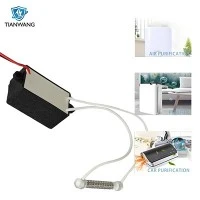
Now, let's take a look at how these standards apply to the ozone purifiers we offer. We have a range of ozone generators, each with different ozone output capacities to suit different needs.
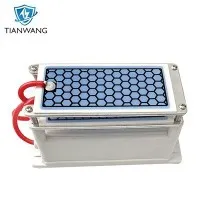
For smaller spaces, like a single room in an apartment or a small office cubicle, our 5g Ozone generator is a great choice. It has a relatively low ozone output, which means it can clean the air effectively without producing ozone levels that are too high. The 5g output is carefully calibrated to stay within the safety limits, so you can use it with peace of mind.
If you have a larger space, such as a big living room or a medium - sized office, our 10g ozone generator Cleaner Ozonizer Odor Eliminator might be more suitable. It can cover a larger area and deal with more stubborn odors and contaminants. But again, we've made sure that the ozone output is within the safety standards.
For really large spaces, like warehouses or industrial workshops, our 20g Portable Ozone Generator Air Sterilizer is the way to go. It has a high - capacity ozone output to quickly and effectively clean the air in large volumes. And just like our other products, it's designed to meet all the necessary safety requirements.
When using an ozone purifier, it's also important to follow some basic safety tips. First of all, never use an ozone purifier in an enclosed space where people or pets are present. Ozone can cause irritation to the eyes, nose, and throat, and in high concentrations, it can even damage the lungs. So, make sure to turn off the purifier and let the ozone dissipate before entering the room.
Another tip is to use the ozone purifier in well - ventilated areas. This helps to keep the ozone levels in check and ensures that any excess ozone is quickly removed from the air.
It's also a good idea to read the user manual carefully before using an ozone purifier. The manual will provide you with specific instructions on how to use the device safely and effectively.


So, there you have it! That's a quick rundown of the ozone safety standard for ozone purifiers. As a supplier, we're committed to providing high - quality, safe ozone purifiers that meet all the necessary standards. If you're in the market for an ozone purifier, whether it's for your home, office, or industrial space, we've got the right product for you.
Don't hesitate to reach out if you have any questions or if you're interested in purchasing one of our ozone purifiers. We're here to help you make the right choice and ensure that you get the best air - cleaning solution for your needs.
References
- Environmental Protection Agency (EPA). National Ambient Air Quality Standards for Ozone.
- Occupational Safety and Health Administration (OSHA). Permissible Exposure Limits for Chemical Substances (Ozone).
- Consumer Product Safety Commission (CPSC). Guidelines for Ozone - Generating Air Cleaners.