In the realm of pulsed power systems, high voltage coils play a pivotal role that is both complex and crucial. As a dedicated high voltage coil supplier, I've witnessed firsthand the diverse applications and the significance of these components in various industries. This blog aims to delve into the role of high voltage coils in pulsed power systems, exploring their functions, design considerations, and real - world applications.
The Basics of Pulsed Power Systems
Pulsed power systems are designed to store energy over a relatively long period and then release it in a very short time, generating high - power pulses. These systems find applications in a wide range of fields, including particle accelerators, electromagnetic launchers, and medical devices. The key to their operation lies in the ability to manipulate large amounts of energy quickly and efficiently, and high voltage coils are one of the fundamental building blocks in achieving this.

Role of High Voltage Coils in Pulsed Power Systems
Energy Storage
One of the primary roles of a high voltage coil in a pulsed power system is energy storage. When an electric current passes through a coil, it creates a magnetic field around it. According to the principles of electromagnetism, energy is stored in this magnetic field. The amount of energy stored in an inductor (coil) is given by the formula (E=\frac{1}{2}Li^{2}), where (L) is the inductance of the coil and (i) is the current flowing through it.
In a pulsed power system, the coil stores energy over a longer time interval during the charging phase. Engineers can adjust the energy storage capacity by changing the coil's inductance, which depends on factors such as the number of turns, the cross - sectional area, and the core material. For example, a coil with a larger number of turns and a high - permeability core material will have a higher inductance and thus can store more energy.
Pulse Shaping
High voltage coils also play a crucial role in pulse shaping. The shape of the power pulse is often critical in different applications. For instance, in some medical devices, a specific pulse shape is required to ensure the effectiveness of the treatment. By carefully designing the coil's electrical properties, such as its inductance and resistance, engineers can control the rate of change of current and voltage in the pulse.
A coil with a high inductance will slow down the rate of current change, resulting in a more gradual rise and fall of the pulse. On the other hand, a coil with lower inductance will allow for a faster current change, creating sharper pulses. The choice of coil parameters depends on the specific requirements of the pulsed power system.
Voltage Transformation
In many pulsed power applications, it is necessary to step up the voltage to achieve the desired high - power pulses. High voltage coils can act as transformers in these systems. A transformer consists of two or more coils wound around a common core. When an alternating current or a time - varying current flows through the primary coil, it induces an electromotive force (EMF) in the secondary coil according to Faraday's law of electromagnetic induction.
The voltage ratio between the primary and secondary coils is proportional to the ratio of the number of turns in each coil. So, by designing a coil with a large number of turns in the secondary winding compared to the primary winding, it is possible to step up the voltage significantly. This is essential in applications where high - voltage pulses are required, such as in some types of lasers and high - energy physics experiments.
Design Considerations for High Voltage Coils in Pulsed Power Systems
Insulation
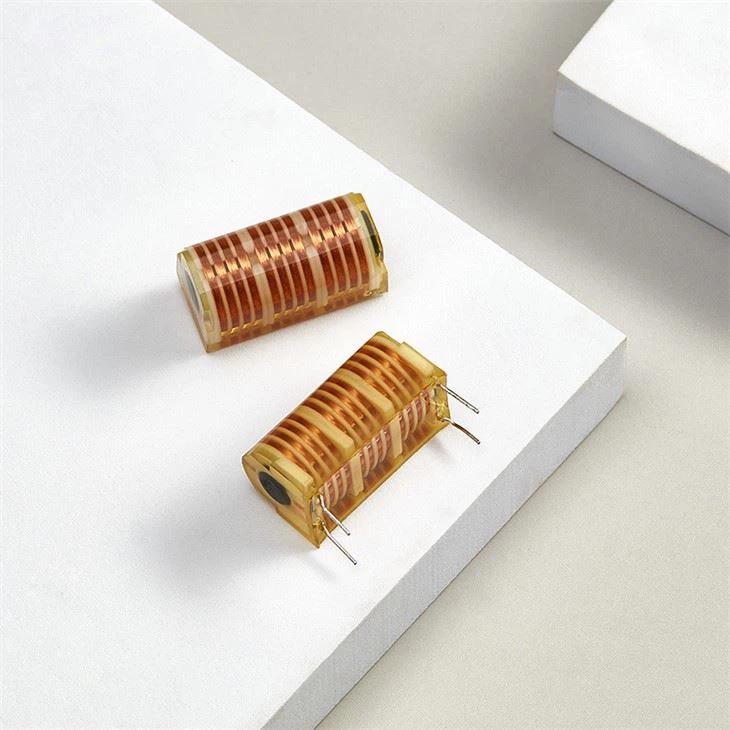
High voltage coils are subjected to very high electric fields, so proper insulation is crucial. Insulation materials must be able to withstand the high voltages without breaking down. Common insulation materials include polyimide films, epoxy resins, and ceramic materials. The choice of insulation depends on factors such as the operating voltage, temperature, and environmental conditions.
A well - insulated coil not only ensures the safe operation of the pulsed power system but also prevents electrical arcing and short - circuits, which could damage the coil and other components in the system.
Thermal Management
During the operation of a pulsed power system, high voltage coils can generate a significant amount of heat. This is due to the Joule heating effect, which is proportional to the square of the current and the resistance of the coil. Excessive heat can degrade the insulation material and reduce the coil's performance and lifespan.
To manage the thermal issues, designers may use techniques such as forced - air cooling, liquid cooling, or heat sinks. These methods help to dissipate the heat generated in the coil and maintain its temperature within an acceptable range.
Core Material
The core material of a high voltage coil has a significant impact on its performance. For low - frequency applications, ferromagnetic materials such as iron or iron - based alloys are commonly used. These materials have high magnetic permeability, which increases the inductance of the coil and allows for more efficient energy storage.
For high - frequency applications, ferrite cores are often preferred. Ferrites have low eddy - current losses at high frequencies, which helps to reduce power dissipation in the coil. The choice of core material should be carefully considered based on the frequency range and the specific requirements of the pulsed power system.
Real - World Applications
Medical Devices
In medical applications, pulsed power systems with high voltage coils are used in devices such as electrosurgery units and shockwave therapy devices. For example, in electrosurgery, high - voltage pulses are used to cut and cauterize tissue. High voltage coils help to generate the necessary high - power pulses with the desired shape and amplitude.
Moreover, our High Frequency Transformer For Beauty Instrument Device is specifically designed for beauty instrument devices, which also rely on pulsed power systems for procedures like skin rejuvenation and hair removal. These coils provide the high - frequency, high - voltage pulses required for the proper functioning of these beauty devices.
Automotive Industry
In the automotive industry, high voltage coils are used in ignition systems. The 24V car high voltage ignition coil is a key component in the engine's ignition system. It takes the low - voltage battery power and steps it up to a high voltage, which is then used to create a spark in the spark plugs. This spark ignites the air - fuel mixture in the engine cylinders, enabling the engine to run.
Ozone Generation
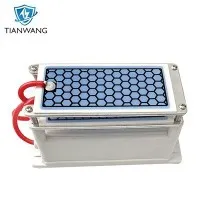
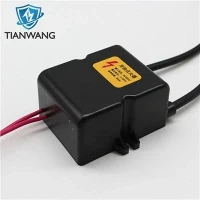
Ozone generators also rely on pulsed power systems with high voltage coils. The High Voltage Coil Of Ozone Generator is used to generate high - voltage pulses that create a strong electric field. This electric field dissociates oxygen molecules in the air, which then recombine to form ozone. Ozone is widely used in water treatment, air purification, and disinfection applications.
Conclusion
High voltage coils are indispensable components in pulsed power systems. Their roles in energy storage, pulse shaping, and voltage transformation are essential for the proper functioning of a wide variety of applications. As a high voltage coil supplier, we understand the importance of providing high - quality, reliable coils that meet the specific requirements of different industries.
If you are in need of high voltage coils for your pulsed power system, whether it's for medical, automotive, or ozone generation applications, we are here to assist you. We can offer customized solutions based on your unique requirements. Please feel free to contact us for a detailed discussion on your procurement needs, and we'll be glad to start a professional negotiation with you.
References
- Grover, F. W. (1946). Inductance Calculations: Working Formulas and Tables. Dover Publications.
- Messier, R. (2014). Principles of Electronic Materials and Devices. McGraw - Hill Education.
- Sudarshan, T. S., & Guttman, R. (2002). Pulse Power Technology. Springer Science & Business Media.