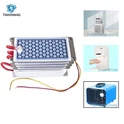
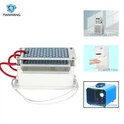
Ozone generators are a type of ozone equipment that have gained significant attention in various industries due to their wide - ranging applications, from air purification to water treatment. As an ozone equipment supplier, I'm often asked about the working principle of ozone generators. In this blog, I'll delve into the details of how these devices function.
The Basics of Ozone
Before we explore the working principle of ozone generators, it's essential to understand what ozone is. Ozone (O₃) is a highly reactive gas composed of three oxygen atoms. Unlike the more stable diatomic oxygen (O₂) that we breathe, ozone is a powerful oxidant. This oxidizing property makes it effective in eliminating odors, killing bacteria and viruses, and breaking down various contaminants.
Different Types of Ozone Generation Methods
There are mainly three methods used in ozone generators to produce ozone: corona discharge, ultraviolet (UV) radiation, and electrolysis. Each method has its own characteristics, advantages, and suitable applications.
Corona Discharge Method
The corona discharge method is the most commonly used technique in industrial and commercial ozone generators. It mimics the natural process that occurs during lightning storms, where ozone is produced when electrical discharges pass through the air.
In a corona discharge ozone generator, there are typically two electrodes separated by a dielectric material. When a high - voltage alternating current is applied across the electrodes, a corona discharge is created in the gap between them. This discharge ionizes the oxygen molecules (O₂) in the surrounding gas (usually air or pure oxygen). The ionized oxygen atoms then combine with other oxygen molecules to form ozone (O₃).


The chemical reaction can be represented as follows:
O₂ + energy (from corona discharge) → 2O
2O + 2O₂ → 2O₃
One of the key advantages of the corona discharge method is its high ozone production capacity. It can generate large amounts of ozone, which makes it suitable for large - scale industrial applications such as water treatment plants, sewage treatment facilities, and large - area air purification. For instance, in water treatment, the high - volume ozone produced can effectively remove organic pollutants, heavy metals, and microorganisms.
However, this method also has some limitations. The corona discharge process generates heat, which can reduce the efficiency of ozone production if not properly managed. Additionally, it may produce nitrogen oxides (NOₓ) as by - products when using air as the input gas, which are harmful pollutants. To address these issues, advanced corona discharge ozone generators are equipped with cooling systems to maintain the optimal operating temperature and use pure oxygen as the input gas to minimize NOₓ production.
If you're looking for a reliable corona - discharge ozone generator, our 5g Ozone generator is a great option. It is designed with advanced cooling technology and high - quality electrodes to ensure stable and efficient ozone production.
Ultraviolet (UV) Radiation Method
The UV radiation method uses ultraviolet light to produce ozone. When UV light with a specific wavelength (around 185 nm) shines on oxygen molecules, it provides enough energy to break the O - O bond in the O₂ molecule. The free oxygen atoms then combine with other oxygen molecules to form ozone.
The chemical reaction is:
O₂ + UV light (185 nm) → 2O
2O + 2O₂ → 2O₃
UV - based ozone generators are relatively simple in structure and cost - effective. They are often used in small - scale applications such as home air purifiers, food storage rooms, and small - volume water treatment systems. For example, in a home environment, a UV ozone generator can help remove unpleasant odors from kitchens, bathrooms, or musty closets.
One of the main drawbacks of the UV radiation method is its relatively low ozone production rate compared to the corona discharge method. It is not suitable for applications that require a large amount of ozone in a short time. Moreover, the efficiency of ozone production can be affected by factors such as the intensity of the UV light source, the distance between the UV lamp and the gas flow, and the presence of dust or contaminants on the lamp surface.
Our 10g ozone generator Cleaner Ozonizer Odor Eliminator utilizes the UV radiation method. It is portable, easy to use, and ideal for small - space air purification and odor removal.
Electrolysis Method
The electrolysis method produces ozone by applying an electric current to water. In an electrolytic ozone generator, a direct current is passed through an electrolyte solution between two electrodes. At the anode, water molecules are oxidized to produce oxygen and ozone.
The overall reaction can be simplified as:
3H₂O → O₃ + 3H₂
Electrolysis - based ozone generators have several advantages. They can produce high - purity ozone without the generation of nitrogen oxides. They are also suitable for applications where a continuous and stable supply of ozone is required, such as in medical disinfection and some high - end water treatment processes.
However, the electrolysis process requires high - quality electrodes and a well - controlled electrolyte environment. The cost of equipment and operation can be relatively high compared to the other two methods. In addition, the lifespan of the electrodes needs to be carefully managed to ensure long - term stable operation.
Our 20g Portable Ozone Generator Air Sterilizer using the electrolysis method is a high - performance device. It is designed for applications that require high - purity ozone, providing reliable sterilization and purification effects.
Applications Based on the Working Principle
The working principle of ozone generators determines their suitability for different applications. For example, corona discharge ozone generators are widely used in large - scale water treatment because of their high ozone production capacity. They can effectively oxidize organic matter, remove color and odor, and disinfect water.
UV - based ozone generators are popular in small - scale air purification due to their simplicity and low cost. They can be easily installed in homes, offices, or small commercial spaces to improve air quality and eliminate odors.
Electrolysis ozone generators, with their high - purity ozone production, are often used in medical and food industries. In the medical field, ozone can be used for disinfection of medical equipment and treatment areas. In the food industry, it can be used for food preservation and sterilization.
Conclusion and Call to Action
Understanding the working principle of ozone generators is crucial for choosing the right equipment for your specific needs. Whether you need a high - volume ozone generator for industrial applications or a small - scale device for home use, we have a wide range of products to meet your requirements.
If you're interested in our ozone equipment or have any questions about ozone generation technology, please don't hesitate to contact us. We're more than happy to provide you with detailed product information, technical support, and help you find the most suitable ozone generator for your application. Let's work together to create a cleaner, safer, and healthier environment.
References
- "Ozone in Water Treatment: Application and Engineering" by Wolfgang Staehelin and Hans - Rudolf Hoigné.
- "The Handbook of Ozone Technology and Applications" edited by Neil R. Adams.
- Various research papers on ozone generation methods published in environmental science and engineering journals.