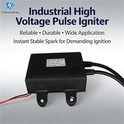
High voltage ignition coils are widely used in wall-hung gas boilers and cookers. Here are some common questions and answers about these components:

Pulse Ignition Coil and Gas Boiler Ignition
In gas boilers, pulse ignition coils are used to produce a spark and ignite the gas in the combustion chamber. The ignition process must be fast and reliable to ensure the proper functioning of the boiler. The pulse ignition coil is a crucial component of the system, and it is responsible for generating and delivering the high voltage pulses required for the ignition.
The pulse ignition coil consists of a primary winding, a secondary winding, and an iron core. The primary winding is connected to the ignition module, and the secondary winding is connected to the spark plug. When the ignition module sends a signal, the primary winding is energized, creating a magnetic field in the core. When the current is interrupted, the magnetic field collapses, inducing a high voltage pulse in the secondary winding. This pulse is then delivered to the spark plug, generating a spark and igniting the gas in the combustion chamber.
The pulse ignition coil must deliver the high voltage pulses quickly and reliably to ensure proper ignition of the gas. The ignition process is critical in gas boilers, and any malfunction can result in loss of efficiency, poor performance, or even dangerous situations. Therefore, the pulse ignition coil must be constructed with high-quality materials and designed to withstand the harsh conditions of the combustion chamber, such as high temperatures, high voltage, and corrosive gases.

Q: Why is a high voltage ignition coil important?
A: A high voltage ignition coil is important because it ensures that gas is ignited promptly and safely when the burner is turned on. Without a reliable ignition coil, there may be issues with delayed ignition or failure to ignite, which can lead to the release of unburnt gas and potentially dangerous situations.
Q: How does a high voltage ignition coil work?
A: A high-pressure ignition coil works by transforming the voltage from the power supply into a much higher voltage, which is then sent to the spark plug. This high voltage is needed to create a spark strong enough to ignite the gas in the burner.
Q: How often should a high voltage ignition transformer be replaced?
A: The lifespan of a high-pressure ignition coil can vary depending on factors such as usage frequency and environmental conditions. However, it is generally recommended to inspect and replace the ignition coil every 2-3 years to ensure optimal performance and safety.