The harm of electricity to the human body is caused by the current itself and the light and heat transformed into electric energy, mainly including electric injury and electric shock. The former mainly refers to burns caused by thermal effects; the latter refers to injuries caused by electric current passing through parts of the human body. Specifically, it refers to cardiac arrest caused by cardiac ventricular fibrillation and current paralysis of the medullary respiratory center, respiratory failure caused by inhibition, etc.
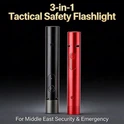
The harm to the human body caused by alternating current and direct current used in daily life is not only related to the voltage level, but also related to many other factors such as current intensity and electrification time. That is to say, even in the case of higher voltage, if the current intensity is negligible and the power-on time is short and short, it will not be life-threatening. The stun gun with flashlight is an example. Although the stun pen can release high-voltage electricity of more than 20,000 volts when used, it has never been heard of it electrocuting a normal person. In the same way, the electrostatic energy generated by the friction of clothes and shoes in daily life is very small and often disappears in a flash. Even if the instantaneous voltage is high, it will not cause harm to people.
If you are shocked by electric shock for a short period of time, there will be no traces through the clothes. If you are shocked by AC High Power Stun Gun, there will be obvious burn marks if the electric shock lasts a little longer. The effect of electric shock is generally pain, numbness, loss of resistance, and severe local spasms and convulsions.
Pen Stun Gun mainly plays a role of self-defense, making the gangster lose the ability to resist instantly, and will not be life-threatening.