Introduction
As beauty technology continues to evolve, modern beauty devices increasingly rely on high-voltage power systems to generate plasma, radio frequency (RF), electrotherapy, and other aesthetic treatment effects. At the heart of these systems is the high voltage transformer, a critical component that directly affects device performance, safety, efficiency, and reliability.
Whether you are developing a plasma beauty pen, RF skin tightening machine, ozone beauty device, or other aesthetic equipment, selecting the right high voltage transformer for beauty devices is essential.
This guide explains the key factors manufacturers, engineers, and sourcing professionals should consider when choosing a transformer supplier and transformer design.
What Is a High Voltage Transformer in Beauty Devices?
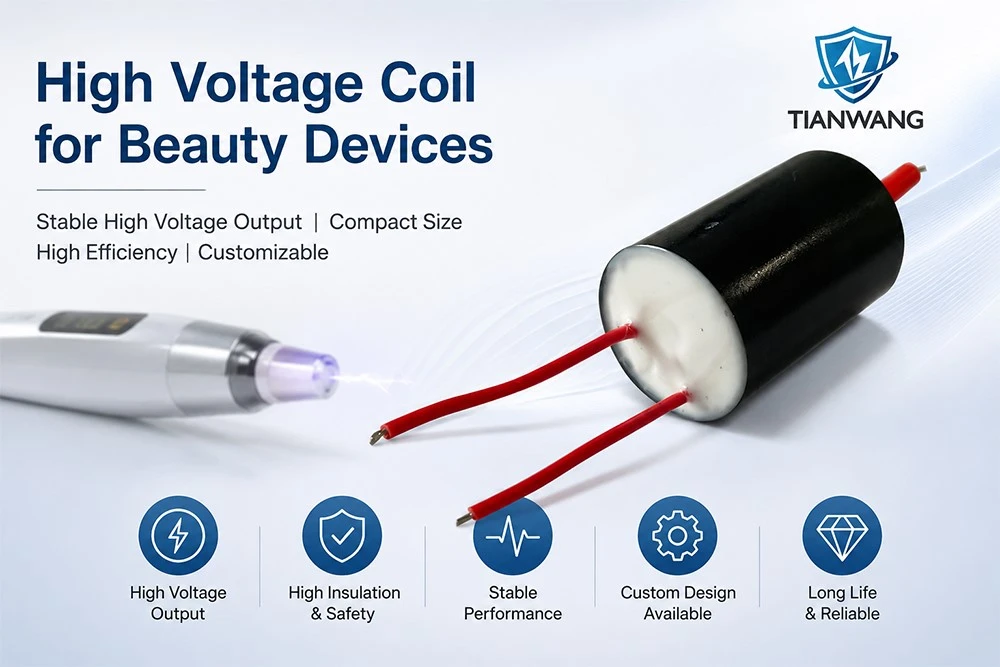
A high voltage transformer is an electronic component designed to convert low-voltage input power into high-voltage output power through electromagnetic induction.
In beauty equipment, these transformers are commonly used to:
Generate high-voltage plasma discharge
Produce RF treatment energy
Create electrical stimulation pulses
Support ozone generation systems
Deliver controlled high-frequency energy
Depending on the application, the transformer may also be referred to as:
High Voltage Transformer
Flyback Transformer
High Voltage Coil
Pulse Transformer
High Frequency Transformer
Although the names vary, the selection principles remain similar.
Why Choosing the Right Transformer Matters
Many beauty device manufacturers focus heavily on software, housing design, and treatment technology while overlooking transformer quality.
However, an improperly selected transformer can cause:
Unstable output voltage
Excessive heat generation
Reduced treatment effectiveness
Electrical noise and EMI issues
Shortened product lifespan
Safety risks
A properly engineered custom high voltage transformer helps ensure stable performance and long-term reliability.
1. Determine the Required Output Voltage
The first step is understanding your application's voltage requirements.
Different beauty devices require different output ranges:
Plasma Beauty Pens
Typically require several kilovolts to generate stable plasma discharge.
RF Beauty Machines
Require controlled high-frequency energy with precise voltage regulation.
Ozone Beauty Equipment
Need stable high-voltage output for ozone generation.
Before contacting a transformer manufacturer, prepare the following information:
Input voltage
Output voltage
Output current
Duty cycle
Operating frequency
Accurate specifications allow suppliers to recommend the most suitable transformer design.
2. Evaluate Operating Frequency
Operating frequency is one of the most important design parameters.
A transformer designed for low-frequency applications cannot efficiently support high-frequency beauty equipment.
Common applications include:
High-frequency beauty devices
RF aesthetic equipment
Plasma generators
Electronic stimulation systems
A properly designed high frequency transformer for beauty equipment offers:
Higher efficiency
Smaller size
Reduced heat generation
Better energy transfer
When discussing your project with suppliers, always specify the operating frequency range.
3. Check Insulation and Safety Design
Safety is a top concern in beauty and aesthetic devices because equipment operates in direct contact with users.
A quality high voltage transformer for beauty machines should include:
High Dielectric Strength
Prevents electrical breakdown between windings.
Reliable Isolation
Protects users from high-voltage leakage.
Quality Insulation Materials
Ensures long-term stability under continuous operation.
Controlled Creepage and Clearance Distances
Reduces the risk of electrical arcing.
Safety performance is often a major differentiator between low-cost and professional transformer manufacturers.
4. Consider Thermal Performance
Heat is one of the most common causes of transformer failure.
Excessive temperature can lead to:
Insulation degradation
Reduced efficiency
Coil damage
Premature product failure
A well-designed beauty device high voltage transformer should feature:
Optimized winding structure
High-quality ferrite core materials
Low-loss magnetic design
Effective thermal management
Request temperature rise data from your supplier whenever possible.
5. Evaluate Customization Capabilities
Most beauty equipment manufacturers require custom solutions rather than off-the-shelf products.
A professional custom high voltage transformer manufacturer should support:
Electrical Customization
Voltage ratio
Output power
Frequency range
Pulse characteristics
Mechanical Customization
Transformer dimensions
Mounting structure
Lead wire configuration
Encapsulation methods
Prototype Development
Rapid prototyping helps accelerate product development and validation.
Customization capability is especially important for OEM and ODM beauty equipment projects.
6. Assess Supplier Manufacturing Experience
Not all transformer manufacturers understand beauty equipment applications.
An experienced supplier should have knowledge of:
RF beauty machines
Plasma beauty devices
Ozone generators
Medical aesthetic equipment
Personal care electronics
When evaluating suppliers, ask:
Do they have beauty device project experience?
Can they provide engineering support?
What testing procedures do they perform?
Can they support volume production?
A supplier with industry experience often shortens development cycles and improves product reliability.
7. Verify Quality Control and Testing
Reliable transformer manufacturers perform extensive testing before shipment.
Typical tests include:
High voltage testing
Turns ratio testing
Inductance measurement
Load testing
Temperature testing
Insulation resistance testing
These tests help ensure every high voltage coil for beauty devices meets performance and safety requirements.
Common Mistakes When Choosing a High Voltage Transformer
Many buyers make the following mistakes:
Choosing Based Only on Price
Lower-cost transformers often result in higher failure rates and increased warranty costs.
Ignoring Thermal Design
Heat-related failures are among the most common transformer issues.
Using Generic Transformers
Beauty equipment often requires specialized high-voltage designs.
Not Planning for Future Product Upgrades
Scalable transformer designs help support future generations of products.
Questions to Ask Your Transformer Supplier
Before finalizing a supplier, consider asking:
Can you provide custom high voltage transformer solutions?
What voltage range can your transformers support?
Do you have experience with beauty device applications?
What testing procedures are performed?
Can you provide samples for evaluation?
What is the production lead time?
Do you support OEM and ODM projects?
The answers can help identify whether a supplier is suitable for long-term cooperation.
Conclusion
Choosing the right high voltage transformer for beauty devices is a critical step in developing reliable and high-performance aesthetic equipment.
Key considerations include output voltage, operating frequency, insulation safety, thermal performance, customization capability, and supplier experience.
A trusted high voltage transformer manufacturer can help optimize device performance, improve product reliability, and accelerate product development.
For beauty device manufacturers, investing in the right transformer solution is not simply a component decision-it is an investment in product quality, safety, and long-term market success.
If you are looking for a reliable high voltage transformer manufacturer for your next project, we are ready to help.
📧 Email: fgd@twgdmall.com
Contact us today to discuss your technical requirements and receive a customized transformer solution for your beauty device application.