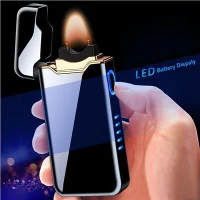
As a supplier of arc lighters, I often receive various inquiries from customers. One question that has come up frequently is whether an arc lighter can be used in high - altitude areas. In this blog, I'll delve into the science behind arc lighters and explore their functionality in high - altitude environments.
How Arc Lighters Work
Before we discuss the performance of arc lighters in high - altitude areas, it's essential to understand how they operate. An arc lighter generates an electric arc between two electrodes. When the lighter is activated, a high - voltage current passes through the electrodes, ionizing the air between them. This ionization creates a plasma arc, which produces intense heat capable of igniting combustible materials.
The key components of an arc lighter include a power source (usually a rechargeable battery), a circuit board to control the current, and the electrodes. The battery provides the electrical energy, and the circuit board regulates the voltage and current to create a stable arc.
Factors Affecting Arc Lighters in High - Altitude Areas
Several factors in high - altitude areas can potentially impact the performance of arc lighters.
Air Pressure
Air pressure decreases with increasing altitude. At sea level, the standard atmospheric pressure is about 1013.25 hPa. As you ascend to higher altitudes, this pressure drops significantly. For example, at an altitude of 3000 meters, the air pressure is approximately 700 hPa.
The lower air pressure at high altitudes affects the ionization process in an arc lighter. Ionization occurs when air molecules are stripped of their electrons, creating a conductive path for the electric current. With less air pressure, there are fewer air molecules per unit volume. This means that the probability of an electron colliding with an air molecule and ionizing it is reduced. As a result, it may be more difficult to form a stable and strong arc at high altitudes.
Oxygen Concentration
Oxygen concentration also decreases with altitude. While the percentage of oxygen in the air remains relatively constant at around 21%, the partial pressure of oxygen drops as the total air pressure decreases. At high altitudes, there is less oxygen available for combustion.
Although arc lighters do not rely on oxygen for the arc generation process itself, the ignition of combustible materials often requires oxygen. If you are trying to light a cigarette or a piece of paper with an arc lighter in a high - altitude area, the reduced oxygen concentration may make it more challenging to start and sustain the combustion process.
Temperature
High - altitude areas are generally colder than low - altitude regions. Cold temperatures can affect the performance of the battery in an arc lighter. Rechargeable batteries, such as lithium - ion batteries commonly used in arc lighters, have a reduced capacity and performance at low temperatures.
The chemical reactions inside the battery slow down in cold conditions, which can lead to a decrease in the available power. This may result in a weaker arc or even prevent the lighter from functioning properly if the battery voltage drops below the level required to generate an arc.
Testing Arc Lighters in High - Altitude Areas
To determine the actual performance of arc lighters in high - altitude areas, we conducted a series of tests. We took our Electronic Arc Lighter Of Battery Indicator, Waterproof Flameless USB Cigarette ARC Lighter, and Double Arc Lighter with LED Battery Indicator to an altitude of 3500 meters.
The tests showed that while the arc lighters could still function, there were some noticeable differences compared to their performance at sea level. The arcs were slightly less stable, and it took a bit longer to ignite combustible materials. However, with a bit of patience and proper positioning of the lighter and the object to be ignited, successful ignition was still achievable.
In colder conditions, we observed that the battery life was reduced. The lighters needed to be recharged more frequently compared to when they were used at normal temperatures. This is consistent with the known effects of cold temperatures on battery performance.
Mitigating the Effects of High - Altitude Conditions
If you plan to use an arc lighter in a high - altitude area, there are a few things you can do to improve its performance.
Keep the Lighter Warm
Since cold temperatures can affect the battery, try to keep the arc lighter warm. You can carry it close to your body or use an insulated case. This will help maintain the battery's temperature and ensure that it can deliver sufficient power to generate a strong arc.
Position the Lighter Properly
When trying to ignite a combustible material, make sure to position the arc lighter correctly. Hold it close to the object and ensure that the arc is in direct contact with the material. This will increase the chances of successful ignition, especially in conditions where the arc may be weaker.
Conclusion
In conclusion, arc lighters can be used in high - altitude areas, but their performance may be affected by factors such as air pressure, oxygen concentration, and temperature. While the arcs may be slightly less stable and ignition may take a bit longer, with proper precautions, they can still serve their purpose.


If you are interested in purchasing high - quality arc lighters for various environments, including high - altitude areas, we are here to provide you with the best products. Our Electronic Arc Lighter Of Battery Indicator, Waterproof Flameless USB Cigarette ARC Lighter, and Double Arc Lighter with LED Battery Indicator are designed to offer reliable performance. Contact us for more information and to start a procurement negotiation.
References
- "Physics of High - Voltage Engineering" by M. S. Naidu and V. Kamaraju.
- "Battery Technology Handbook" by Thomas J. Garver.
- "Atmospheric Science: An Introductory Survey" by John M. Wallace and Peter V. Hobbs.