As a supplier of ozone equipment, I am frequently asked whether ozone equipment can be effectively used for aquaculture water treatment. The short answer is yes, and in this blog, I will delve into the details of how ozone equipment can revolutionize aquaculture water management, the benefits it brings, and the considerations when using such equipment.
The Science Behind Ozone in Aquaculture Water Treatment
Ozone (O₃) is a powerful oxidizing agent. When introduced into aquaculture water, it can react with a variety of substances. It can break down organic matter, such as uneaten feed, fish feces, and dead algae. These organic materials, if left untreated in the water, can lead to the growth of harmful bacteria and fungi, and also cause a decrease in water oxygen levels. Ozone oxidizes these organic compounds into simpler and less harmful substances, thereby improving water quality.
Moreover, ozone has strong disinfection capabilities. It can inactivate a wide range of pathogens, including bacteria, viruses, and protozoa. In aquaculture, diseases can spread rapidly among fish populations, leading to significant losses. By using ozone to disinfect the water, the risk of disease outbreaks can be greatly reduced. For example, studies have shown that ozone can effectively inactivate Aeromonas hydrophila, a common bacterium that causes diseases in fish.
Benefits of Using Ozone Equipment in Aquaculture
Improved Water Quality
One of the most significant benefits of using ozone equipment in aquaculture is the improvement of water quality. As mentioned earlier, ozone can break down organic matter and disinfect the water. This leads to clearer water, lower levels of ammonia and nitrite, and a more stable pH. Clearer water allows for better light penetration, which is beneficial for the growth of aquatic plants in the aquaculture system. Lower ammonia and nitrite levels are crucial as these substances are toxic to fish, and maintaining their levels within a safe range is essential for fish health.
Enhanced Fish Health
With improved water quality and reduced pathogen levels, fish are less likely to get sick. This results in better growth rates and higher survival rates. Fish in a clean and healthy environment can allocate more energy to growth rather than fighting off diseases. Additionally, ozone can also improve the oxygen transfer efficiency in the water. Adequate oxygen levels are vital for fish respiration, and better oxygen transfer can lead to more active and healthy fish.
Reduced Chemical Usage
In traditional aquaculture water treatment, various chemicals are often used for disinfection and water quality improvement. However, these chemicals can have negative impacts on the environment and fish health if not used properly. Ozone is a natural and environmentally friendly alternative. It decomposes quickly into oxygen after use, leaving no harmful residues in the water. This reduces the need for other chemical treatments, making aquaculture more sustainable.
Types of Ozone Equipment Suitable for Aquaculture
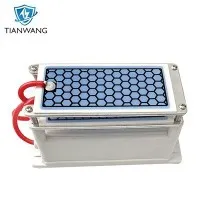
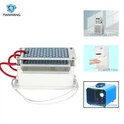
5g Ozone generator
A 5g Ozone generator is a great option for small - scale aquaculture operations, such as home aquariums or small fish ponds. It can produce an appropriate amount of ozone to maintain water quality in a relatively small volume of water. This type of generator is usually compact and easy to install, making it convenient for hobbyists or small - scale farmers.
20g Portable Ozone Generator Air Sterilizer
For medium - sized aquaculture facilities, a 20g Portable Ozone Generator Air Sterilizer can be a suitable choice. It has a higher ozone production capacity, which can handle larger volumes of water. The portability of this generator also allows it to be used in different parts of the aquaculture facility as needed.
10g ozone generator Cleaner Ozonizer Odor Eliminator
The 10g ozone generator Cleaner Ozonizer Odor Eliminator is another option that can be used in aquaculture. It can not only improve water quality but also help to eliminate unpleasant odors in the aquaculture environment. This is especially useful in facilities where the smell of fish and organic matter can be a problem.
Considerations When Using Ozone Equipment in Aquaculture
Ozone Dosage
Determining the correct ozone dosage is crucial. Too little ozone may not be effective in treating the water, while too much ozone can be toxic to fish. The appropriate dosage depends on various factors, such as the volume of water, the type of aquaculture species, and the initial water quality. It is recommended to start with a low dosage and gradually increase it while closely monitoring the fish behavior and water quality parameters.
Contact Time
The contact time between ozone and water is also important. Sufficient contact time allows ozone to react with the target substances in the water. This can be achieved by using appropriate ozone injection systems and ensuring that the water flow rate is adjusted to provide enough contact time.
Residual Ozone Monitoring
After ozone treatment, it is necessary to monitor the residual ozone levels in the water. Residual ozone can be harmful to fish if it exceeds a certain concentration. There are various ozone monitoring devices available on the market that can accurately measure the residual ozone levels, and appropriate measures should be taken to ensure that the levels are within a safe range.
Conclusion
In conclusion, ozone equipment can be effectively used for aquaculture water treatment. It offers numerous benefits, including improved water quality, enhanced fish health, and reduced chemical usage. However, it is important to use the equipment correctly, taking into account factors such as ozone dosage, contact time, and residual ozone monitoring.


If you are interested in using ozone equipment for your aquaculture water treatment needs, I encourage you to contact me. We can have a detailed discussion about your specific requirements, and I can provide you with the most suitable ozone equipment solutions. Let's work together to improve the efficiency and sustainability of your aquaculture operations.
References
- Boyd, C. E., & Tucker, C. S. (1998). Water quality in ponds for aquaculture. Kluwer Academic Publishers.
- Summerfelt, S. T., & Hochheimer, T. D. (1997). Ozone in aquaculture: A review. Aquacultural Engineering, 16(1 - 2), 1 - 31.
- Timmons, M. B., Ebeling, J. M., Wheaton, F. W., Summerfelt, S. T., & Vinci, B. J. (2002). Recirculating aquaculture. CABI Publishing.