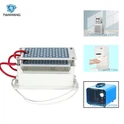
Hey there! As a supplier of ozone generator air products, I'm super excited to share with you how these nifty devices clean the air. You might be wondering, "What the heck is an ozone generator, and how does it work its magic?" Well, stick around, and I'll break it all down for you.
First off, let's talk about what ozone is. Ozone is a gas made up of three oxygen atoms (O₃), unlike the regular oxygen we breathe, which has two atoms (O₂). It's a powerful oxidant, which means it can react with other substances and break them down. That's the key to how an ozone generator cleans the air.
So, how does an ozone generator create ozone? Most ozone generators use a process called corona discharge. It's like a mini lightning bolt inside the machine. When electricity passes through a high-voltage electrode, it creates a corona, which is a region of ionized air. This ionized air then breaks apart oxygen molecules (O₂) and recombines them into ozone (O₃).
Once the ozone is created, it's released into the air. And here's where the real action happens. Ozone can react with a whole bunch of things in the air, like odors, bacteria, viruses, and mold. When it comes into contact with these pollutants, it oxidizes them, which basically means it breaks them down into smaller, less harmful molecules.
Let's take odors as an example. Whether it's the smell of cigarettes, pet urine, or a funky kitchen, ozone can work wonders. It attacks the odor-causing molecules and breaks them apart, neutralizing the smell. It's like a breath of fresh air for your home or office.
Bacteria and viruses are no match for ozone either. Ozone can penetrate the cell walls of these microorganisms and destroy them. It's a natural way to disinfect the air and reduce the risk of getting sick. In fact, many hospitals and clinics use ozone generators to keep their environments clean and germ-free.
Mold is another common problem that ozone can help with. Mold spores can float in the air and cause all sorts of health issues, like allergies and respiratory problems. Ozone can kill the mold spores and prevent them from growing and spreading. It's a great way to keep your home or workplace mold-free.
But here's the thing. Ozone can be harmful to humans and animals if the concentration is too high. That's why it's important to use ozone generators properly. Most ozone generators come with adjustable settings, so you can control the amount of ozone they produce. You should also make sure the area is well-ventilated when the ozone generator is running. And never use an ozone generator in an area where people or animals are present.
Now, let's talk about the different types of ozone generators we offer. We have a range of products to suit different needs and budgets.
If you're looking for a portable and powerful ozone generator, check out our 20g Portable Ozone Generator Air Sterilizer. It's perfect for small to medium-sized rooms and can quickly clean the air and eliminate odors.
For a more compact option, we have the 10g ozone generator Cleaner Ozonizer Odor Eliminator. It's great for use in cars, closets, or other small spaces.
And if you're on a budget, our 5g Ozone generator is a great choice. It's small but mighty and can still do a good job of cleaning the air.


So, there you have it. That's how an ozone generator cleans the air. It's a natural and effective way to improve the air quality in your home or workplace. If you're interested in learning more about our ozone generator air products or have any questions, feel free to reach out. We're here to help you find the right solution for your needs.
Whether you're a homeowner looking to get rid of stubborn odors, a business owner wanting to create a healthier environment for your employees, or just someone who cares about the air you breathe, our ozone generators are a great option. Don't hesitate to contact us for more information or to discuss your specific requirements. We're always happy to have a chat and help you make the best decision.
References:
- "Ozone Generators That Are Sold As Air Cleaners." United States Environmental Protection Agency.
- "Ozone and Your Health." American Lung Association.