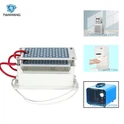
As a supplier of ozone generators with CE certification, I often get asked about the ozone reaction time of our products. Understanding this is crucial for both the effective use of ozone generators and ensuring user safety. In this blog, I'll delve into what ozone reaction time is, factors that influence it, and how it relates to our ozone generators.
What is Ozone Reaction Time?
Ozone (O₃) is a highly reactive gas. The ozone reaction time refers to the period it takes for ozone to react with various substances in the environment. When ozone is released into the air, it starts to interact with pollutants, odors, bacteria, viruses, and other organic and inorganic compounds. This reaction can lead to the breakdown or neutralization of these substances, resulting in cleaner and fresher air.


The reaction time can vary significantly depending on several factors. For instance, different types of pollutants have different reaction rates with ozone. Some volatile organic compounds (VOCs) may react relatively quickly, while others might take longer. Similarly, the concentration of ozone in the air plays a vital role. Higher ozone concentrations generally lead to faster reaction times, but they also come with increased risks if not properly managed.
Factors Affecting Ozone Reaction Time
Pollutant Type
As mentioned earlier, different pollutants react at different speeds with ozone. For example, simple aldehydes and ketones, which are common VOCs found in indoor air, can react with ozone within minutes. On the other hand, more complex hydrocarbons or certain pesticides may require longer reaction times, sometimes even hours.
Ozone Concentration
The concentration of ozone in the air is directly proportional to the reaction rate. A higher ozone concentration means more ozone molecules are available to react with pollutants. However, it's important to note that the ozone concentration should be within safe limits. In Europe, the CE - certified ozone generators must comply with strict regulations regarding ozone emission levels to protect human health.
Temperature and Humidity
Temperature and humidity also affect the ozone reaction time. Generally, higher temperatures can increase the reaction rate as the molecules have more kinetic energy. Humidity can also play a role. In some cases, water vapor can react with ozone to form hydroxyl radicals, which can further enhance the oxidation of pollutants. However, excessive humidity can also cause ozone to decompose more quickly, reducing its effectiveness.
Surface Area
The surface area of the pollutants can influence the reaction time. If the pollutants are spread over a large surface area, there is more contact between ozone and the pollutants, leading to faster reactions. For example, in a room with a lot of porous materials like carpets and upholstery, the pollutants adsorbed on these surfaces can react with ozone more efficiently.
Ozone Reaction Time in Our Ozone Generators
Our CE - certified ozone generators are designed to provide an optimal balance between ozone production and reaction time. We have a range of products to suit different needs, from small - scale applications like 10g Car Ozone Generator to larger industrial - grade units such as the 20g Ozone Air Purifier Generator Ozone Machine.
For the 10g car ozone generator, the reaction time is relatively short due to the small enclosed space of a car. It can effectively eliminate odors, bacteria, and viruses within 30 minutes to an hour, depending on the severity of the pollution. The ceramic ozone plate in this generator, similar to the Ceramic Ozone Plate for Air Purifier Parts 5g, is designed to produce a stable and consistent amount of ozone, ensuring efficient reactions.
The 20g ozone air purifier generator, on the other hand, is suitable for larger spaces such as offices, warehouses, or commercial kitchens. In these larger areas, the reaction time may be longer, typically ranging from 1 to 3 hours. This is because the ozone needs to spread throughout the entire space and react with a larger volume of pollutants.
Safety Considerations
While ozone can be highly effective in purifying the air, it's important to use it safely. Ozone is a respiratory irritant, and prolonged exposure to high levels of ozone can cause health problems such as coughing, shortness of breath, and chest pain. That's why our CE - certified ozone generators are equipped with safety features to control the ozone concentration and ensure that it remains within safe limits.
When using our ozone generators, it's recommended to leave the area during the ozone treatment and wait for the ozone to dissipate before re - entering. The dissipation time depends on the ozone concentration and the ventilation in the area. In well - ventilated spaces, ozone can dissipate within 30 minutes to a few hours.
How to Optimize Ozone Reaction Time
To optimize the ozone reaction time, there are several steps you can take. First, make sure the area is properly sealed during the ozone treatment. This prevents ozone from escaping and ensures that the ozone concentration remains high enough to react with the pollutants. Second, increase the ventilation after the treatment to speed up the dissipation of ozone. Third, clean the area before using the ozone generator. Removing visible dirt and debris can increase the surface area available for ozone to react with the remaining pollutants.
Conclusion
The ozone reaction time of our CE - certified ozone generators is influenced by multiple factors, including pollutant type, ozone concentration, temperature, humidity, and surface area. By understanding these factors, users can make the most of our ozone generators and achieve effective air purification.
If you're interested in purchasing our ozone generators or have any questions about ozone reaction time, feel free to contact us for a detailed discussion. We're committed to providing high - quality products and professional advice to meet your air purification needs.
References
- Environmental Protection Agency (EPA). Ozone: Health and Environmental Effects.
- World Health Organization (WHO). Guidelines for Indoor Air Quality: Ozone.
- European Union regulations on ozone emissions from electrical appliances.