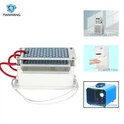
Hey there! As a supplier of ozone air purifiers, I often get asked about the maximum ozone concentration an air purifier can produce safely. It's a crucial question, especially considering the health implications of ozone exposure. In this blog post, I'll dive into the science behind ozone generation, safe concentration levels, and how our products fit into the picture.
First off, let's understand what ozone is and how it works in air purifiers. Ozone (O₃) is a highly reactive gas composed of three oxygen atoms. It's a powerful oxidizing agent, which means it can break down and neutralize various pollutants in the air, such as odors, bacteria, viruses, and mold spores. When an ozone air purifier generates ozone, it releases this gas into the air, where it reacts with these pollutants, effectively eliminating them.
However, ozone can also be harmful to human health, especially at high concentrations. Exposure to elevated levels of ozone can cause respiratory problems, such as coughing, shortness of breath, and chest pain. It can also irritate the eyes, nose, and throat, and exacerbate existing respiratory conditions like asthma. That's why it's essential to ensure that ozone air purifiers operate within safe concentration limits.
So, what is the maximum ozone concentration an air purifier can produce safely? Well, it depends on a few factors, including the size of the room, the duration of use, and the specific application. In general, the Occupational Safety and Health Administration (OSHA) has set a permissible exposure limit (PEL) for ozone in the workplace of 0.1 parts per million (ppm) over an 8-hour time-weighted average. The Environmental Protection Agency (EPA) has also established a national ambient air quality standard (NAAQS) for ozone of 0.070 ppm over an 8-hour period.
For home use, the EPA recommends that ozone concentrations should not exceed 0.05 ppm. This is a conservative limit designed to protect the health of sensitive individuals, such as children, the elderly, and those with respiratory conditions. It's important to note that these limits are for continuous exposure over an extended period. Short-term exposure to slightly higher concentrations may be acceptable, but it's still crucial to follow the manufacturer's instructions and use the air purifier in a well-ventilated area.
At our company, we take the safety of our customers very seriously. That's why all of our ozone air purifiers are designed to operate within safe concentration limits. We use advanced ozone generation technology to ensure that the ozone output is carefully controlled and regulated. Our products are also equipped with safety features, such as timers and sensors, to prevent overexposure to ozone.
Let's take a look at some of our popular ozone air purifiers and their ozone output levels:
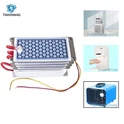
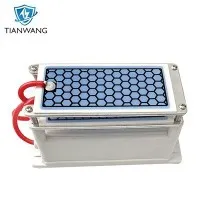
- 10g ozone generator Cleaner Ozonizer Odor Eliminator: This portable ozone generator is perfect for small to medium-sized rooms. It has an ozone output of up to 10 grams per hour, which is sufficient to eliminate odors and purify the air. However, it's important to use this product in a well-ventilated area and follow the manufacturer's instructions carefully.
- 20g Portable Ozone Generator Air Sterilizer: This more powerful ozone generator is suitable for larger rooms and commercial applications. It has an ozone output of up to 20 grams per hour, which can effectively sterilize the air and eliminate harmful pollutants. Again, it's crucial to use this product in a well-ventilated area and avoid prolonged exposure to ozone.
- 5g Ozone generator: This compact ozone generator is ideal for personal use, such as in a car or a small office. It has an ozone output of up to 5 grams per hour, which is enough to freshen the air and remove odors. It's also very easy to use and can be plugged into any standard electrical outlet.
In addition to considering the ozone output levels, it's also important to choose an ozone air purifier that is suitable for your specific needs. For example, if you have a large room or a commercial space, you may need a more powerful ozone generator. On the other hand, if you only need to purify the air in a small area, a portable ozone generator may be sufficient.
Another factor to consider is the type of ozone generation technology used in the air purifier. There are two main types of ozone generation technology: corona discharge and ultraviolet (UV) light. Corona discharge ozone generators are more common and are generally more powerful. They work by creating a high-voltage electrical discharge that splits oxygen molecules into individual oxygen atoms, which then combine with other oxygen molecules to form ozone. UV light ozone generators, on the other hand, use ultraviolet light to break down oxygen molecules and create ozone. They are generally less powerful but are also quieter and more energy-efficient.
When using an ozone air purifier, it's important to follow the manufacturer's instructions carefully. This includes using the product in a well-ventilated area, avoiding prolonged exposure to ozone, and keeping the air purifier out of reach of children and pets. It's also a good idea to monitor the ozone levels in the air using an ozone monitor, especially if you have any concerns about the safety of the product.
In conclusion, the maximum ozone concentration an air purifier can produce safely depends on a variety of factors, including the size of the room, the duration of use, and the specific application. It's important to choose an ozone air purifier that is suitable for your needs and to use it in accordance with the manufacturer's instructions. At our company, we offer a range of high-quality ozone air purifiers that are designed to operate within safe concentration limits. If you're interested in learning more about our products or have any questions, please don't hesitate to contact us. We'd be happy to help you find the right ozone air purifier for your needs.
References


- Occupational Safety and Health Administration (OSHA). Permissible Exposure Limits (PELs).
- Environmental Protection Agency (EPA). National Ambient Air Quality Standards (NAAQS) for Ozone.
- World Health Organization (WHO). Guidelines for Indoor Air Quality: Ozone.