Hey there! As a supplier of ozone generator air products, I've been getting a lot of questions lately about the ozone distribution pattern of an ozone generator air. So, I thought I'd take a moment to break it down for you all.


First off, let's talk about what ozone generators are and what they do. Ozone generators are devices that produce ozone gas, which is a form of oxygen with three atoms instead of the usual two. Ozone is a powerful oxidant, which means it can break down and neutralize a wide range of pollutants, including bacteria, viruses, mold spores, and odors. That's why ozone generators are often used for air purification, water treatment, and industrial applications.
Now, when it comes to the ozone distribution pattern of an ozone generator air, there are a few key factors to consider. The first is the size and layout of the space where the ozone generator is being used. A small, enclosed room will have a different ozone distribution pattern than a large, open area. In a small room, the ozone will tend to be more concentrated near the generator and may take longer to reach all areas of the room. In a large area, the ozone may disperse more quickly, but it may also be more difficult to achieve a uniform concentration throughout the space.
Another factor that affects the ozone distribution pattern is the type of ozone generator being used. There are two main types of ozone generators: corona discharge generators and ultraviolet (UV) generators. Corona discharge generators produce ozone by passing air through a high-voltage electrical field, while UV generators produce ozone by exposing air to UV light. Each type of generator has its own unique ozone distribution pattern, which can be influenced by factors such as the generator's output rate, the shape and size of the generator, and the placement of the generator within the space.
In general, corona discharge generators tend to produce a more concentrated ozone plume near the generator, with the ozone gradually dispersing as it moves away from the source. This can be beneficial in some applications, such as odor elimination, where a high concentration of ozone is needed to neutralize strong odors. However, it can also be a drawback in other applications, such as air purification in a large area, where a more uniform distribution of ozone is needed.
On the other hand, UV generators tend to produce a more diffuse ozone distribution pattern, with the ozone spreading out more evenly throughout the space. This can be beneficial in applications where a uniform concentration of ozone is needed, such as air purification in a large area. However, UV generators typically have a lower output rate than corona discharge generators, which means they may take longer to achieve the desired ozone concentration.
So, how can you optimize the ozone distribution pattern of your ozone generator air? Here are a few tips:
- Choose the right generator for your needs: Consider the size and layout of the space where you'll be using the ozone generator, as well as the specific application you're using it for. If you need to achieve a high concentration of ozone in a small area, a corona discharge generator may be the best choice. If you need a more uniform distribution of ozone in a large area, a UV generator may be a better option.
- Position the generator properly: Place the ozone generator in a central location within the space, away from obstacles and in an area with good air circulation. This will help ensure that the ozone is evenly distributed throughout the space.
- Use fans or ventilation systems: Fans or ventilation systems can help circulate the ozone throughout the space, improving its distribution pattern. You can use a portable fan to blow the ozone towards areas that need it most, or you can install a ventilation system to ensure a constant flow of fresh air.
- Monitor the ozone concentration: Use an ozone monitor to measure the ozone concentration in the space. This will help you ensure that the ozone concentration is within safe levels and that it's evenly distributed throughout the space.
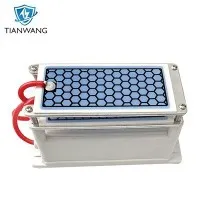
At our company, we offer a wide range of ozone generator air products to meet your specific needs. Whether you're looking for a small, portable ozone generator for home use or a large, industrial-grade ozone generator for commercial applications, we've got you covered. Some of our popular products include the 5g Ozone generator, the 20g Portable Ozone Generator Air Sterilizer, and the 10g ozone generator Cleaner Ozonizer Odor Eliminator.
If you're interested in learning more about our ozone generator air products or have any questions about ozone distribution patterns, please don't hesitate to contact us. We'd be happy to help you find the right solution for your needs.
In conclusion, understanding the ozone distribution pattern of an ozone generator air is essential for achieving optimal results in your air purification or other applications. By considering factors such as the size and layout of the space, the type of generator being used, and the positioning of the generator, you can ensure that the ozone is evenly distributed throughout the space and that it's providing the maximum benefit. And if you're in the market for an ozone generator air product, be sure to check out our selection of high-quality, reliable products.
References
- Ozone: Science and Engineering. A Journal Devoted to the Development and Application of Ozone Technology.
- Handbook of Ozone Technology and Applications.