Why Does My Burner Have No Spark? 7 Common Burner Ignition Problems and Solutions
A burner that suddenly stops producing a spark can shut down an entire heating system, leading to costly downtime, production delays, and maintenance expenses. Whether you operate an industrial furnace, oil burner, boiler, or commercial heating system, ignition failure is one of the most common issues maintenance teams encounter.
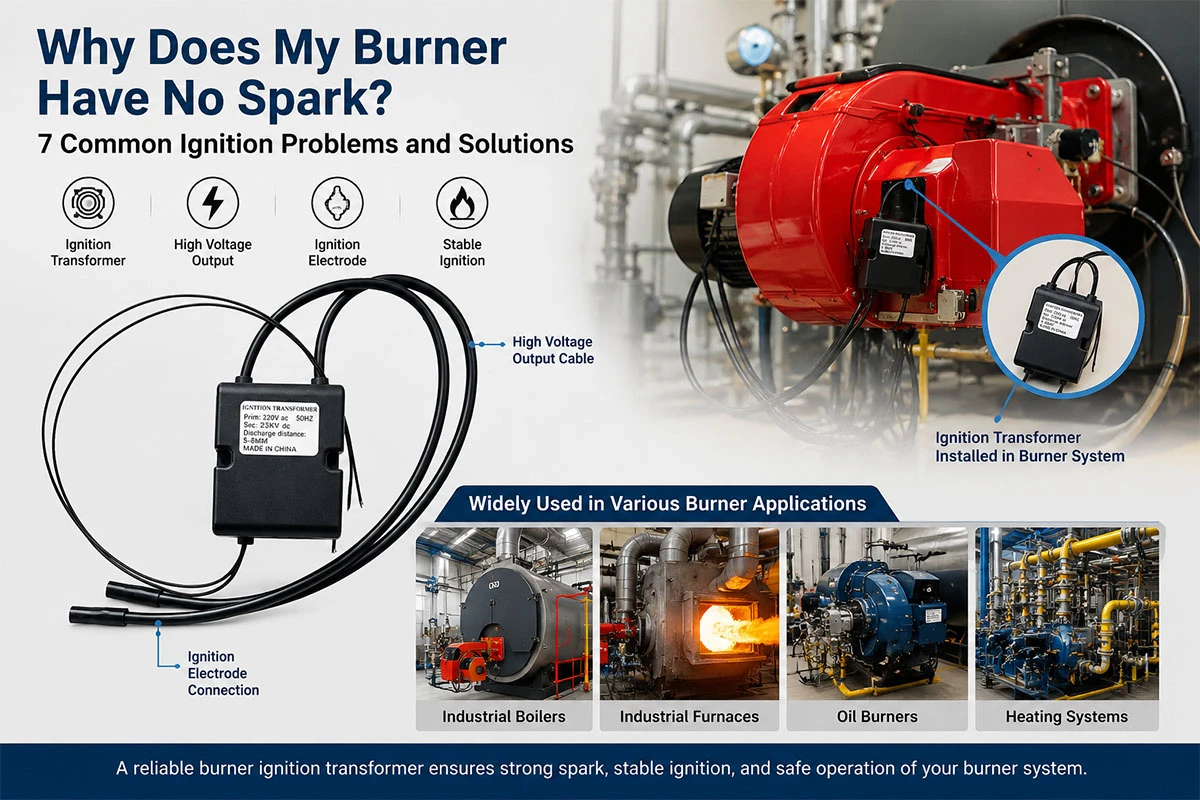
At the center of every reliable burner ignition system is a burner ignition transformer. This critical component generates the high voltage required to create a spark and ignite the fuel-air mixture. When a burner has no spark, the problem is often related to the ignition transformer, electrodes, wiring, or other ignition components.
In this guide, we'll examine seven common burner ignition problems, explain their causes, and provide practical solutions to help restore reliable ignition performance.
How Does a Burner Ignition Transformer Work?
A burner ignition transformer converts standard input voltage into high voltage, typically ranging from 8kV to 15kV or higher. This high voltage creates an electrical arc between the ignition electrodes, igniting the fuel-air mixture inside the burner.
Whether it's an oil burner ignition transformer, a boiler ignition transformer, or an ignition system used in industrial furnaces, reliable spark generation is essential for safe and efficient combustion.
When any part of the ignition process fails, the burner may not ignite at all.
1. Failed Burner Ignition Transformer
The most common cause of ignition failure is a damaged or aging burner ignition transformer.
Over time, insulation materials degrade, internal windings weaken, and heat exposure reduces transformer performance. A failing high voltage ignition transformer may still receive power but fail to generate sufficient voltage to produce a strong ignition spark.
Common Symptoms
No spark at the electrodes
Weak or inconsistent spark
Delayed ignition
Frequent burner lockouts
Solution
Test the transformer output using appropriate diagnostic equipment. If voltage output is below specification, replacement is recommended.
For industrial applications, selecting a reliable industrial burner ignition transformer can significantly improve ignition reliability and reduce maintenance costs.
2. Incorrect Electrode Gap or Alignment
Even the best ignition transformer cannot produce reliable ignition if the electrode gap is incorrect.
When the gap is too wide, the spark may not bridge the distance. When it's too narrow, spark energy can be reduced, leading to unstable ignition.
Common Symptoms
Weak ignition spark
Intermittent ignition
Delayed burner startup
Solution
Inspect electrode positioning and adjust according to the burner manufacturer's specifications. Proper alignment ensures maximum spark efficiency and reliable burner performance.
3. Damaged High-Voltage Ignition Cable
High-voltage ignition cables carry thousands of volts from the burner ignition transformer to the electrodes.
Over time, cable insulation can crack due to heat, vibration, moisture, or aging.
Common Symptoms
Spark leakage outside the cable
Random ignition failures
Reduced spark intensity
Solution
Inspect all ignition leads for damage and replace worn cables immediately. A damaged cable can prevent sufficient voltage from reaching the ignition electrodes.
4. Poor Grounding
Many technicians overlook grounding when troubleshooting burner ignition problems.
Without proper grounding, the electrical circuit cannot be completed efficiently, preventing the spark from forming correctly.
Common Symptoms
No spark despite transformer operation
Intermittent ignition failures
Unstable burner performance
Solution
Check all grounding points and electrical connections. Clean corrosion and tighten loose terminals to ensure proper electrical continuity.
5. Dirty or Damaged Ignition Electrodes
Ignition electrodes operate in harsh combustion environments and are constantly exposed to heat, carbon deposits, and vibration.
Over time, contamination or physical damage can interfere with spark generation.
Common Symptoms
Weak ignition spark
Burner misfires
Spark tracking along ceramic insulators
Solution
Inspect electrodes regularly, remove carbon buildup, and replace cracked or damaged components. Preventive maintenance can eliminate many common ignition system troubleshooting issues before they become serious failures.
6. Power Supply or Control Circuit Problems
Sometimes the issue is not the ignition transformer itself but the electrical system that supplies power to it.
Blown fuses, faulty relays, damaged control modules, or loose wiring can interrupt the ignition sequence.
Common Symptoms
Complete loss of ignition
No transformer output
Fault codes on burner controls
Solution
Verify incoming voltage, inspect fuses, and test control circuits before replacing major components. Many cases of ignition transformer failure are actually caused by upstream electrical issues.
7. Excessive Heat and Harsh Operating Conditions
Industrial burners often operate in demanding environments where temperatures remain high for extended periods.
Excessive heat accelerates insulation aging, reduces transformer lifespan, and increases the likelihood of ignition failure.
Common Symptoms
Frequent transformer replacement
Reduced spark strength
Unexpected shutdowns
Solution
Choose a boiler ignition transformer or industrial burner ignition transformer specifically designed for continuous-duty operation and high-temperature environments.
Instead of using low-cost replacement parts, many equipment manufacturers prefer industrial-grade ignition systems engineered for long-term reliability.
At Jiangsu Tianwang Solar Technology Co., Ltd, we manufacture high voltage ignition transformers designed for oil burners, boilers, furnaces, and industrial heating systems. Our products are engineered to provide stable ignition performance even in demanding operating conditions.
How to Prevent Burner Ignition Problems
Preventive maintenance is the most effective way to reduce ignition failures and extend equipment life.
Recommended practices include:
Inspecting ignition transformers regularly
Checking electrode gap and alignment
Replacing damaged ignition cables
Verifying grounding connections
Cleaning ignition electrodes
Monitoring operating temperatures
Testing ignition performance during routine maintenance
A proactive maintenance program can significantly reduce downtime and improve combustion efficiency.
Frequently Asked Questions
What does a burner ignition transformer do?
A burner ignition transformer converts standard voltage into high voltage to generate the spark needed to ignite fuel in a burner system.
How do I know if my ignition transformer is bad?
Common signs include:
No spark
Weak spark
Delayed ignition
Frequent burner shutdowns
Intermittent ignition failures
Can a weak ignition transformer cause burner ignition problems?
Yes. A failing high voltage ignition transformer may produce insufficient voltage, resulting in weak ignition spark and unreliable burner performance.
How long does an industrial burner ignition transformer last?
A high-quality industrial burner ignition transformer can provide years of reliable operation when properly installed and maintained.
Why Choose Tianwang as Your Ignition Transformer Partner?
For more than 35 years, Jiangsu Tianwang Solar Technology Co., Ltd has specialized in high-voltage ignition technology and power electronics manufacturing.
We provide:
Industrial burner ignition transformers
Oil burner ignition transformers
Boiler ignition transformers
Custom ignition transformer solutions
OEM and ODM manufacturing services
Stable high-voltage output technology
Strict quality control and testing
As an experienced OEM ignition transformer manufacturer and burner ignition transformer supplier, we support equipment manufacturers, distributors, and industrial customers worldwide.

Final Thoughts
When asking, "Why does my burner have no spark?", the answer is often related to one of seven common issues: a failed burner ignition transformer, incorrect electrode gap, damaged ignition cable, poor grounding, contaminated electrodes, power supply faults, or excessive operating temperatures.
Identifying the root cause quickly can minimize downtime, improve combustion efficiency, and reduce maintenance costs.
If you are looking for a reliable burner ignition transformer supplier, need a replacement ignition transformer, or require a custom ignition transformer for a new project, Jiangsu Tianwang Solar Technology Co., Ltd can provide professional ignition solutions tailored to your application.
Have a ignition transformer design ? For product inquiries, OEM/ODM cooperation, or distribution opportunities,
Send your specification to alice@twgdsolar.com, alice@twgdmall.com and request a sample .
WhatsApp/WeChat/Mobile: +86-15261031116