Why Is Your Electric Fence Voltage So Low? What We've Learned After 30+ Years in the Field
A few months ago, a cattle ranch owner from Queensland, Australia contacted our team with a problem that sounded familiar.
He had recently installed a new electric fence energizer that was advertised to power more than 20 kilometers of fencing. On paper, it seemed more than capable of handling his ranch. However, when he tested the voltage at the far end of the fence, the reading was barely above 1,000 volts.
His first reaction was simple:
"The electric fence charger isn't powerful enough."
But after reviewing the installation details, we discovered that the energizer was not the problem at all.
In fact, this situation is surprisingly common. After more than 35 years of manufacturing high-voltage electronic products, we've found that most low-voltage fence issues are caused by installation conditions rather than the electric fence energizer itself.
If your fence voltage keeps dropping, here are the most common causes and what you can do about them.
Start with the Grounding System
Many ranch owners focus on the fence wire and overlook the grounding system.
An electric fence works as a complete circuit. The pulse generated by the electric fence charger travels through the fence wire, passes through the animal, enters the soil, and returns to the energizer through the grounding system.
If the ground system is weak, the circuit cannot perform efficiently.
We've seen farms install a powerful commercial electric fence energizer but rely on a single short ground rod. In dry regions such as Australia, South Africa, and parts of Argentina, this often leads to disappointing fence performance.
For most livestock fencing systems, we recommend using at least three galvanized ground rods installed several meters apart and connected with proper grounding cable. Moist soil conditions also help improve conductivity.
Before replacing your energizer, always check the grounding system first.
Vegetation May Be Draining Your Fence Power
Another issue we frequently encounter is vegetation touching the fence.
One ranch customer in Brazil was preparing to replace his entire fencing system because voltage levels kept dropping during the rainy season. Before purchasing a larger unit, he asked our engineers to review the installation.
The problem turned out to be simple.
Tall grass and weeds were touching hundreds of meters of fence wire. Every contact point allowed electricity to leak into the ground.
After clearing vegetation and improving grounding, the fence voltage increased significantly without changing the existing electric fence energizer.
This is exactly why many large ranches choose a low impedance electric fence energizer.
Unlike conventional models, a low-impedance design can maintain stronger output performance even when some vegetation is touching the fence. For farms with rapid grass growth, this feature often reduces maintenance requirements and improves overall fence reliability.
Don't Ignore Connections and Fence Hardware
Sometimes the cause of low voltage is hidden in small details.
Loose wire joints, corroded connections, damaged insulators, and undersized fence wire can all create resistance within the system.
Over a short distance, these problems may seem insignificant. Across several kilometers of fencing, however, they can lead to substantial voltage loss.
When evaluating an electric fencing system, we recommend checking:
Wire quality and diameter
Fence insulators
Gate connections
Underground cable sections
Joint clamps and connectors
A single poor connection can reduce the performance of an otherwise excellent fence charger.
Choosing the Right Electric Fence Energizer
One of the biggest mistakes buyers make is focusing only on the advertised fence distance.
Terms such as "20 km fence energizer" or "50 km fence charger" are often based on ideal test conditions with little vegetation and perfect grounding.
In real-world ranch environments, other factors are more important:
Output joules
Low impedance performance
Grounding efficiency
Vegetation load
Climate conditions
Livestock type
Fence maintenance practices
For cattle ranches, sheep farms, goat grazing operations, and wildlife control projects, selecting the right electric fence energizer should be based on actual field conditions rather than marketing claims.
If your property has heavy vegetation, choosing a low impedance electric fence charger will usually deliver better results than simply buying a larger unit.
Electric Fence Charger vs. Electric Fence Controller
Many buyers ask about the difference between an electric fence charger and an electric fence controller.
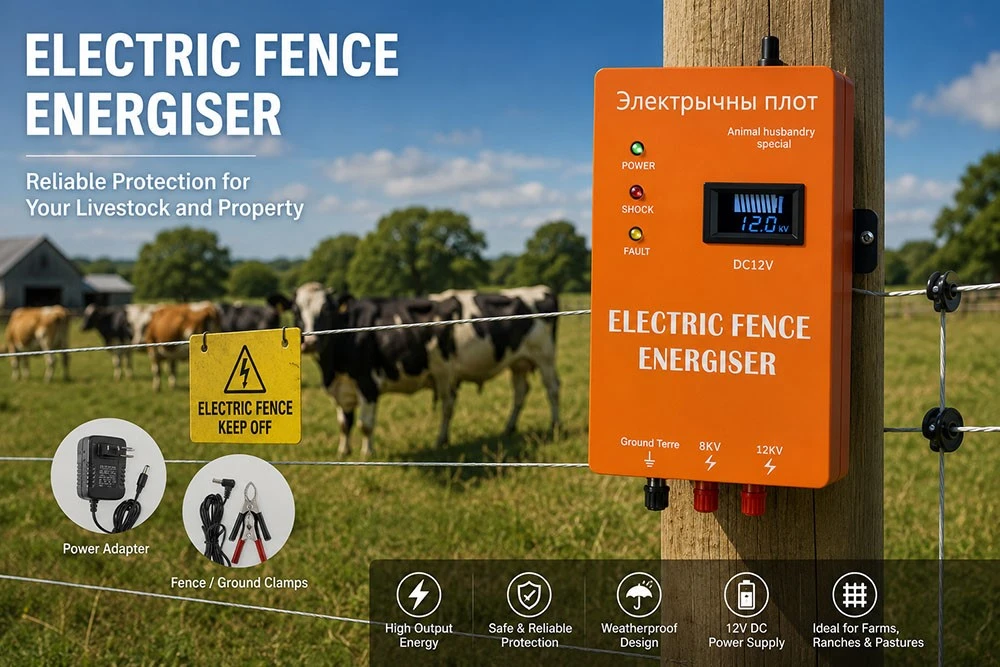
An electric fence charger, also called an electric fence energizer, generates the high-voltage pulses that travel through the fence.
An electric fence controller adds monitoring and management functions. Depending on the system, it may provide fault detection, zone control, alarms, or remote monitoring capabilities.
For large ranches and perimeter security applications, combining a reliable energizer with an intelligent electric fence controller can simplify maintenance and reduce downtime.
Why Buyers Choose Tianwang
Jiangsu Tianwang Solar Technology Co., Ltd. has been developing and manufacturing high-voltage electronic products since 1990.
With more than three decades of industry experience, we supply electric fence energizers, electric fence chargers, and electric fence control solutions to distributors, agricultural equipment suppliers, and ranch operators around the world.
Our products are designed to perform in demanding environments, from large cattle ranches and sheep farms to agricultural protection and perimeter security projects.
Whether you need a standard livestock fence energizer or a customized OEM solution, our engineering team can help you select the most suitable product for your application.
Frequently Asked Questions
What causes low voltage on an electric fence?
Poor grounding, vegetation contact, damaged insulators, and loose electrical connections are the most common causes.
Can weeds reduce fence voltage?
Yes. Weeds and grass touching the fence create leakage paths that continuously drain energy from the system.
What is a low impedance electric fence energizer?
A low impedance electric fence energizer is designed to maintain effective fence performance even when vegetation contacts the fence wire.
How many joules do I need for a cattle fence?
The answer depends on fence length, vegetation conditions, and animal type. Most cattle operations require higher output than small hobby farms.

Need Help Finding the Right Fence Solution?
If you're experiencing low fence voltage or planning a new fencing project, our team can help.
Tell us your fence length, livestock type, power source, and site conditions, and we'll recommend the most suitable electric fence energizer, electric fence charger, or electric fence controller for your application.
Contact Jiangsu Tianwang Solar Technology Co., Ltd. today to request product information, OEM options, or a factory-direct quotation.