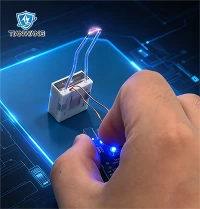
High Voltage Transformer Epoxy Potting: Process, Insulation & Custom OEM Solutions
Reliable Insulation. Precision Manufacturing. Flexible Customization.
High voltage transformers require carefully designed insulation systems to operate reliably in demanding electrical environments. For manufacturers of industrial equipment, the quality of coil winding, insulation materials and encapsulation processes can directly influence product consistency and long-term performance.
Epoxy potting is widely used in high voltage transformer manufacturing to encapsulate electrical components, provide insulation and protect internal structures. When combined with an appropriate vacuum potting process, it can help reduce trapped air and improve the consistency of the encapsulation.
As a high voltage electronic component manufacturer, Jiangsu Tianwang Solar Technology Co., Ltd. provides transformer manufacturing and OEM/ODM customization services. Our production capabilities include precision coil winding, epoxy potting, component assembly and product inspection.
This guide explains how epoxy potting works, why it matters in high voltage transformer design, and what equipment manufacturers should consider when sourcing a custom high voltage transformer.

1. What Is Epoxy Potting in High Voltage Transformers?
Epoxy potting is a manufacturing process in which electrical components are encapsulated with specially formulated epoxy resin.
In high voltage transformers, the resin surrounds selected internal components, such as coils and electrical connections, to create an insulating and protective structure.
Depending on the transformer design and application, epoxy potting can provide several benefits:
Electrical insulation: Helps isolate conductive components and maintain the intended insulation structure.
Moisture protection: Helps reduce the exposure of encapsulated components to moisture and environmental contaminants.
Mechanical protection: Supports internal components and helps protect them from movement and vibration.
Process consistency: Provides a repeatable encapsulation method when resin preparation, filling and curing are properly controlled.
The actual performance depends on the transformer design, resin properties, insulation distances, operating conditions and manufacturing quality.
Epoxy potting is not a substitute for proper electrical design. The complete insulation system must be evaluated according to the intended voltage, operating environment and application requirements.
2. Why Is Insulation Important in High Voltage Transformer Design?
High voltage transformer insulation must be considered from the beginning of product development.
Unlike ordinary low-voltage components, high voltage transformers need appropriate insulation between windings, cores, terminals and other conductive parts.
Insufficient insulation design or inconsistent manufacturing may increase the risk of electrical breakdown, leakage current or premature product failure.
Several factors should be considered during development.
2.1 Insulation Between Windings
Primary and secondary windings may operate at different electrical potentials. Their insulation structure must be designed according to the required input and output specifications.
Wire selection, winding arrangement, insulation materials and the physical separation between conductive parts all contribute to the overall insulation design.
2.2 Air Bubbles and Voids
Air bubbles or voids inside an encapsulation structure may create areas with different dielectric properties.
Under high electric field conditions, these areas can affect insulation performance and may increase the risk of partial discharge or electrical breakdown.
Vacuum degassing and controlled resin filling can help reduce trapped air. However, they do not guarantee that all voids will be eliminated.
2.3 Environmental Protection
Industrial equipment may operate in environments involving humidity, dust, temperature changes or mechanical vibration.
A properly selected potting material can help protect encapsulated electrical components from certain environmental influences.
The resin formulation and encapsulation structure should be selected according to the actual operating conditions rather than assuming that one material is suitable for every application.
3. How Does the Vacuum Epoxy Potting Process Work?
Vacuum epoxy potting is an important manufacturing process for many encapsulated high voltage transformer designs.
The purpose is to prepare the resin, reduce trapped air and fill the intended encapsulation space as consistently as possible.
A typical manufacturing workflow includes the following stages.
Step 1: Component Preparation
Before potting, the transformer components are prepared and assembled according to the product design.
This may include:
Coil winding and insulation treatment
Core assembly
Lead wire and terminal positioning
Preliminary component inspection
Preparation of the potting enclosure or mold
Clean and properly prepared components help support consistent resin adhesion and encapsulation.
Step 2: Epoxy Resin Preparation
The epoxy resin and curing agent are prepared according to the material supplier's specified mixing ratio and process requirements.
Mixing, viscosity, temperature and working time need to be controlled.
Inappropriate mixing or handling may affect the final encapsulation quality.
Step 3: Vacuum Degassing and Potting
Vacuum equipment is used to remove air from the resin or the prepared assembly, depending on the selected manufacturing process.
The resin is then introduced into the intended encapsulation space.
The process needs to consider the component geometry, resin flow characteristics and available filling paths.
The objective is to achieve consistent encapsulation while minimizing trapped air.
Step 4: Curing
After filling, the epoxy resin is cured according to its specified temperature and time requirements.
Curing conditions depend on the selected resin formulation and product design.
Step 5: Inspection
After curing, the encapsulated transformer is inspected for visible defects, dimensional consistency and other product-specific requirements.
Electrical testing can then be performed according to the applicable product specifications and inspection plan.
Important: Vacuum potting is one part of the overall manufacturing process. It should be combined with appropriate coil design, insulation materials, process control and electrical verification.
4. Inside Our High Voltage Transformer Manufacturing Process
Consistent product quality starts with manufacturing control.
At Jiangsu Tianwang, our production process integrates coil winding, component assembly, epoxy potting and inspection to support the development of high voltage electronic components.
4.1 Precision Coil Winding
Coil winding is one of the most important stages in transformer manufacturing.
The winding structure, wire diameter, number of turns and winding arrangement must be selected according to the electrical design.
Our production capabilities include automatic winding equipment to support repeatable coil manufacturing.
Image suggestion: Automatic transformer coil winding machine with copper wire.
Image Alt: Automatic Coil Winding Process for High Voltage Transformer Manufacturing
4.2 Core and Component Assembly
After winding, the coil and related components are assembled according to the product structure.
Core positioning, insulation materials, terminal connections and component dimensions are checked during assembly.
Image suggestion: Transformer coil and core assembly process.
Image Alt: High Voltage Transformer Core and Coil Assembly
4.3 Vacuum Epoxy Potting
For transformer designs requiring epoxy encapsulation, the prepared components undergo the specified potting process.
Vacuum equipment and controlled resin handling help reduce trapped air and support consistent encapsulation.
The process is selected according to the transformer structure and insulation requirements.
Image suggestion: Real factory photograph of vacuum epoxy resin potting equipment and transformer encapsulation.
Image Alt: Vacuum Epoxy Potting Process for High Voltage Transformers
4.4 Curing and Product Inspection
After potting, the components are cured according to the resin manufacturer's process requirements.
The finished parts are then checked for appearance, dimensions and other specified characteristics.
Image suggestion: Cured epoxy-potted transformer components undergoing inspection.
Image Alt: Epoxy Encapsulated High Voltage Transformer Inspection
4.5 Electrical Testing
Electrical testing is an important part of transformer quality verification.
The test items and acceptance criteria should be determined according to the product design, applicable standards and customer requirements.
Depending on the product, the inspection plan may include relevant electrical performance tests and visual or dimensional checks.
Image suggestion: Transformer electrical testing equipment in the factory.
Image Alt: Electrical Testing of High Voltage Transformer Components

5. Epoxy Potting vs. Other Insulation Methods
Epoxy potting is not the only insulation method used in electrical components. Different designs may require different approaches.
| Insulation method | Main characteristics | Typical considerations |
|---|---|---|
| Epoxy Potting | Encapsulates selected components with cured resin | Suitable for designs requiring solid encapsulation and environmental protection |
| Insulation Tape | Provides localized insulation between layers or components | Material selection, application and insulation structure are important |
| Insulation Sleeves | Provides insulation around wires or terminals | Useful for localized electrical isolation |
| Plastic Housing | Provides an external enclosure and physical protection | Housing design alone does not replace internal insulation requirements |
The most suitable method depends on the operating voltage, component structure, environmental conditions, production process and cost requirements.
For some high voltage transformer designs, multiple insulation methods are used together.
6. Custom High Voltage Transformer OEM/ODM Solutions
Different equipment manufacturers have different electrical and mechanical requirements.
A standard transformer may not fit every application, especially when the customer needs a specific output voltage, installation structure or connection method.
We support discussions for custom high voltage transformer development based on customer drawings, samples and application requirements.
6.1 Custom Electrical Specifications
Electrical parameters can be evaluated according to the intended application, including:
Input voltage
Output voltage
Output current
Operating frequency
Duty cycle
Electrical load requirements
The feasible specification range depends on the product structure and engineering evaluation.
6.2 Custom Dimensions and Mounting
Mechanical compatibility is important when a transformer needs to fit into existing equipment.
Customization discussions may include:
Overall dimensions
Mounting holes and installation positions
Component layout
Housing or encapsulation structure
6.3 Custom Pins, Wires and Connectors
Electrical connections can be adapted to the customer's assembly requirements.
Options for evaluation may include:
Pin configuration
Pin spacing
Lead wire length
Wire specifications
Connector types
Terminal positions
6.4 Epoxy Potting and Insulation Requirements
For products requiring encapsulation, the potting material and process should be evaluated according to the application.
Important considerations include:
Required insulation structure
Component geometry
Operating environment
Resin compatibility
Curing process
Testing requirements
Our engineering team can review the available information and discuss a suitable manufacturing approach.

7. From Prototype Development to Mass Production
For OEM customers, successful product development involves more than manufacturing a single sample.
A clear development process helps reduce communication errors and supports a smoother transition to production.
Step 1: Requirement Review
The customer provides application details, electrical specifications, drawings, photographs or an existing sample.
Step 2: Technical Evaluation
The engineering team reviews the electrical and mechanical requirements and evaluates the feasibility of the proposed design.
Step 3: Sample Development
A prototype or development sample is prepared according to the agreed specifications.
Step 4: Sample Testing and Confirmation
The sample is evaluated against the agreed requirements. Necessary adjustments are discussed before production approval.
Step 5: Production Preparation
After the design and sample are confirmed, the production process and inspection requirements are established.
Step 6: Mass Production and Inspection
Products are manufactured according to the confirmed specifications and applicable quality inspection procedures.
This process helps equipment manufacturers develop customized components while maintaining clear communication from initial evaluation to production.
8. Applications of High Voltage Transformers
High voltage transformers and related high voltage modules are used in various industrial and electronic applications.
The required electrical structure and insulation method depend on the equipment design.
8.1 Industrial Ignition Systems
Ignition transformers are used in certain gas and oil burner systems to generate the high voltage required for ignition.
The electrical specifications, insulation structure and output characteristics must match the burner and ignition electrode design.
Related product: Oil Burner Ignition Transformers.
8.2 Electrostatic Powder Coating Equipment
High voltage cascades and related components are used in electrostatic powder coating systems.
The design must consider the required output characteristics, installation structure and compatibility with the spray gun system.
Related product: High Voltage Cascades for Powder Coating Equipment.
8.3 Electric Fence Energizers
High voltage transformer modules are used in electric fence energizer systems to generate high voltage pulses.
Product design should consider the input power source, pulse characteristics, insulation requirements and the overall energizer structure.
Related product: Electric Fence Transformer Modules.
8.4 Other High Voltage Electronic Equipment
Custom high voltage components may also be developed for specialized industrial equipment.
The design should be evaluated according to the actual application, electrical load, installation space and operating environment.
9. Why Choose Jiangsu Tianwang for High Voltage Transformer Manufacturing?
Choosing a high voltage transformer supplier involves evaluating more than the product price.
Manufacturing capability, engineering communication, process consistency and customization support are also important.
Jiangsu Tianwang Solar Technology Co., Ltd. focuses on high voltage electronic products and transformer-related manufacturing.
Our manufacturing capabilities include:
Manufacturing Experience: More than 35 years of experience in high voltage electronic product development and manufacturing.
Automatic Coil Winding: Production equipment supporting repeatable coil winding operations.
Vacuum Epoxy Potting: Encapsulation capabilities for product designs requiring epoxy potting.
Integrated Manufacturing: Manufacturing processes covering winding, assembly, potting and inspection.
OEM/ODM Customization: Support for discussions based on customer drawings, samples and application requirements.
Development to Production: Cooperation from initial sample evaluation to mass production.
We work with equipment manufacturers and sourcing teams to evaluate customized high voltage component requirements.
Whether you need a new transformer design or modifications to an existing component, providing clear application and specification information is the best starting point.
10. Frequently Asked Questions
Q1. What is epoxy potting in a high voltage transformer?
Epoxy potting is a process that uses cured epoxy resin to encapsulate selected electrical components. It can provide electrical insulation, mechanical support and protection against certain environmental influences.
Q2. Why is vacuum epoxy potting used?
Vacuum epoxy potting helps reduce trapped air during resin preparation and encapsulation. This can support more consistent filling and insulation quality, depending on the component design and process conditions.
Q3. Can you manufacture custom high voltage transformers?
Yes. We can evaluate OEM/ODM projects based on customer drawings, samples, electrical specifications and application requirements. Final feasibility depends on the technical design.
Q4. Can transformer dimensions and pin configurations be customized?
Dimensions, mounting structures, pins, lead wires and connector arrangements can be discussed according to the customer's equipment requirements.
Q5. Can you support prototype development and mass production?
We can discuss projects from sample development and technical evaluation to production preparation and mass manufacturing, subject to project requirements and confirmation.
Q6. What information is needed for a custom transformer quotation?
To help us evaluate your project, please provide the application, input voltage, required output voltage and current, operating frequency, duty cycle, dimensions, connection requirements and estimated order quantity.
Drawings, photographs or an existing sample are also helpful.

11. Request a Custom High Voltage Transformer Solution
Looking for a high voltage transformer manufacturer for your industrial equipment?
Jiangsu Tianwang can discuss custom transformer requirements involving electrical specifications, coil winding, insulation structure, epoxy potting and mechanical dimensions.
Send us your product drawings, existing transformer sample or application details. Our team will review your requirements and discuss the next steps for sample development and OEM/ODM cooperation.
Contact us to discuss your high voltage transformer project.
Recommended information to include in your inquiry:
Application or equipment type
Input voltage
Required output voltage and current
Operating frequency and duty cycle
Dimensions and mounting requirements
Pins, wires or connectors
Estimated order quantity
Drawings, photographs or existing samples
Let's discuss a suitable high voltage transformer solution for your equipment.